Yes, you can hike the Salkantay trek without a guide. The trail needs no government permit and no licensed guide, so it is legal and very doable for experienced hikers; you only pay small entrance fees in soles collected locally. What you take on instead is every piece of logistics, from transport and food to Machu Picchu tickets, plus full responsibility for your own safety at 4,650 m.
We are a local operator in Cusco, so of course we run guided treks. But plenty of travellers walk Salkantay independently, and we would rather give you an honest picture than a sales pitch. If you want the big overview of routes, days and altitudes first, read our complete Salkantay trek guide, then come back here for the do-it-yourself details.
Is it legal to hike Salkantay on your own?
Completely. The Salkantay trail is not part of the regulated Inca Trail network, so there is no daily permit quota and no rule that you must go with an agency. That is one of the reasons people choose it: the classic Inca Trail requires a government permit, permits are limited and often sell out months ahead, and you can only walk it with a licensed operator. If you are still deciding between the two routes, our comparison of Salkantay vs the Inca Trail goes through the differences.
What you cannot skip, guided or not, is a Machu Picchu entrance ticket if you want to visit the site at the end. That ticket is sold with fixed entry times and circuits, and it is the one thing that can derail an independent plan if you leave it too late.
What you must organize yourself
On a guided trek, each of these points is already solved. On your own, each one is your job.
Getting to the trailhead
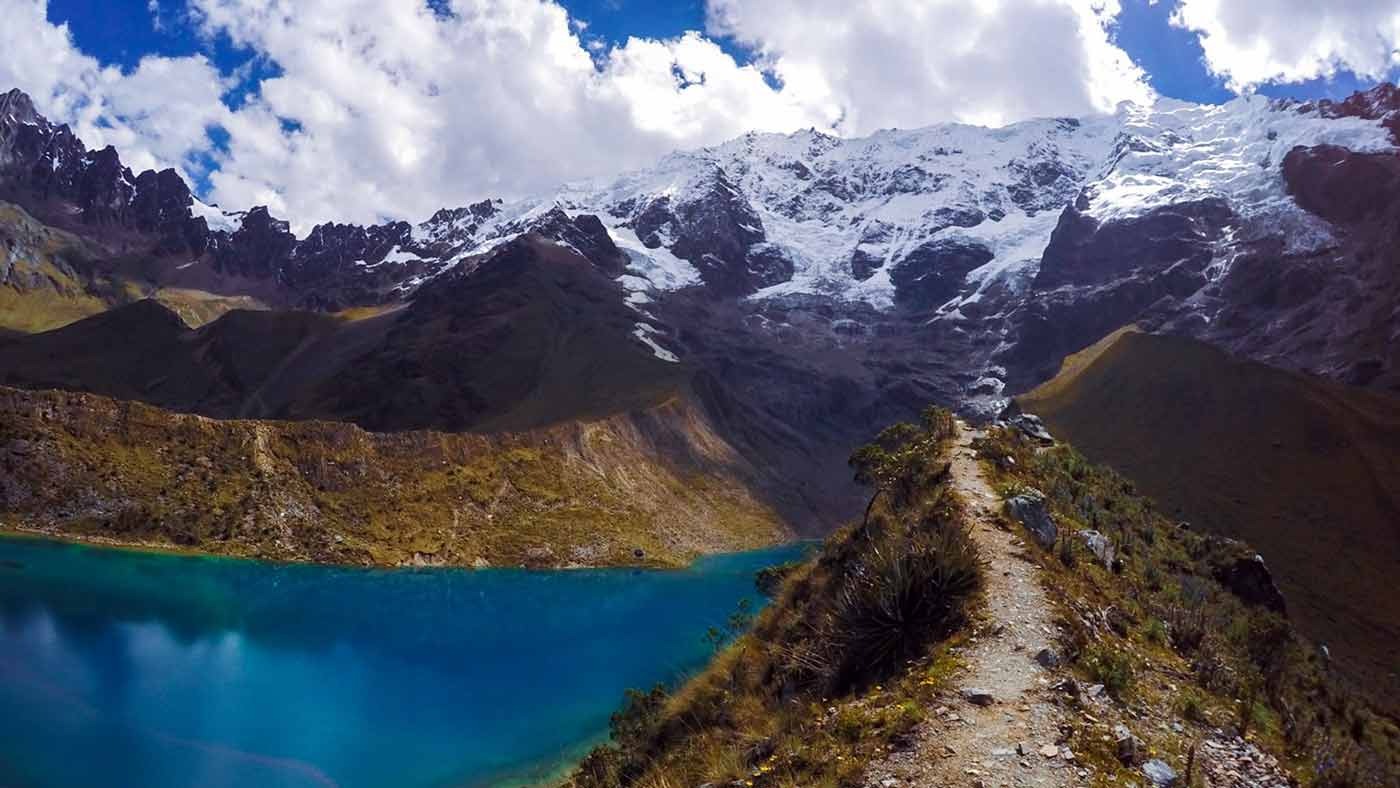
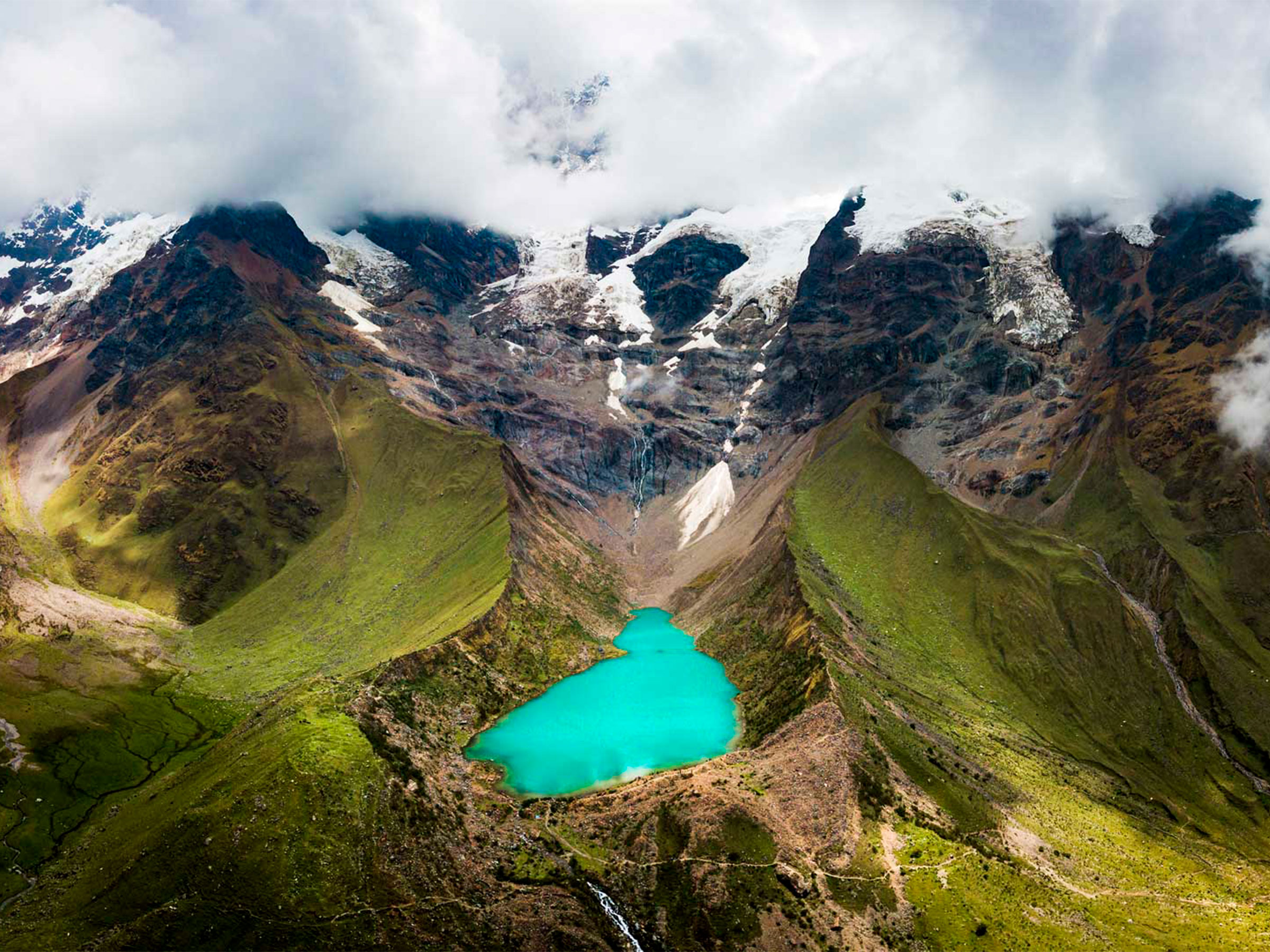
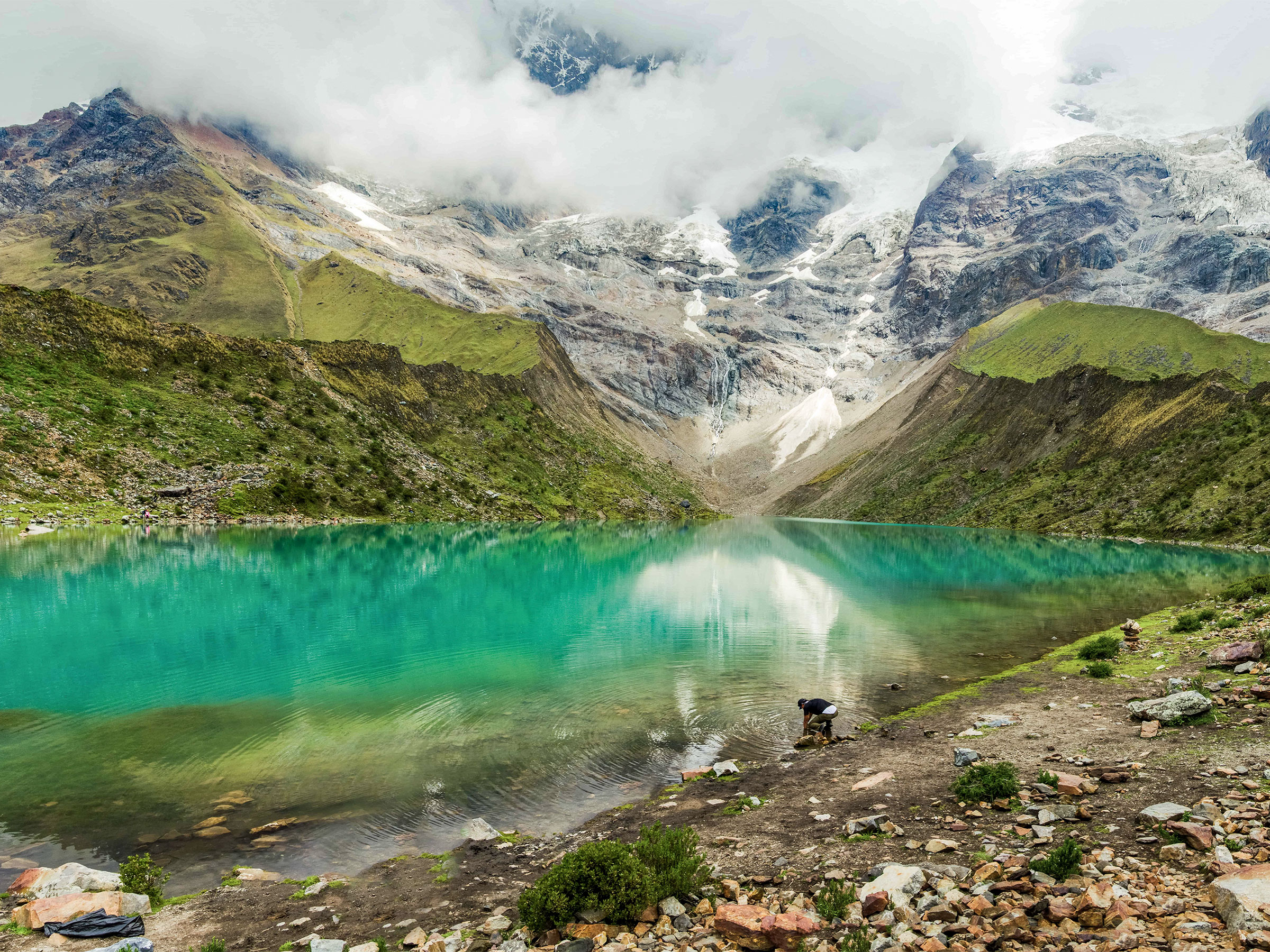
The route starts in the mountains west of Cusco (about 3,400 m). The road goes through Mollepata, a village where most groups stop for breakfast about 2 hours from Cusco, and continues roughly another hour to Soraypampa (about 3,900 m), the usual starting camp and the base for Humantay Lake. Some itineraries start walking at Challacancha.
Independent hikers need to arrange their own public or private transport for this stretch. Options, departure points and timings change, so ask in Cusco a day or two before you leave rather than trusting old forum posts.
Food and water
Plan to carry most of your food for the whole trek. You may find small shops in villages on the lower sections, but do not build your plan around buying supplies high up, and there are no vendors on the Humantay Lake trail. Bring a way to treat or boil water, and carry 1.5–2 L capacity for the long sections. A stove, fuel and lightweight meals add noticeable weight to your pack, which is the biggest physical difference between hiking solo and hiking with horse support.
Shelter: tent or lodging
You have two choices: carry a tent, sleeping bag and mat, or rely on camping spots and basic lodging along the route. If you camp, your sleeping bag matters more than anything else. In the dry season (roughly May to September) nights near the pass are the coldest of the year and often drop below freezing. If you plan to use lodging instead of a tent, check availability before you go, especially in high season, and have a backup.
Navigation
The main route is popular and reasonably easy to follow in clear weather, but clouds can close in quickly near the pass and there are side paths and junctions lower down. Download an offline map with the route before you leave Cusco, keep your phone charged with a power bank, and do not take shortcuts off the main trail.
Weather and altitude
Altitude is the real challenge of Salkantay, not the trail itself. Spend at least 2 days in Cusco or the Sacred Valley before starting, drink plenty of water, eat light and skip alcohol the first days. Watch for headache, nausea, shortness of breath and poor sleep; if symptoms get worse, go down. On your own, only you and your partner are watching for these signs. Our article on Salkantay trek difficulty explains what each day really feels like.
Weather also shapes the plan. The rainy season runs from December to March, with January and February the wettest months: mud, clouds over the peaks and a slower pass day. The cloud forest on the far side is humid and can bring rain in any month. See our guide to the best time for the Salkantay trek before you pick dates.
Crossing the pass on your own
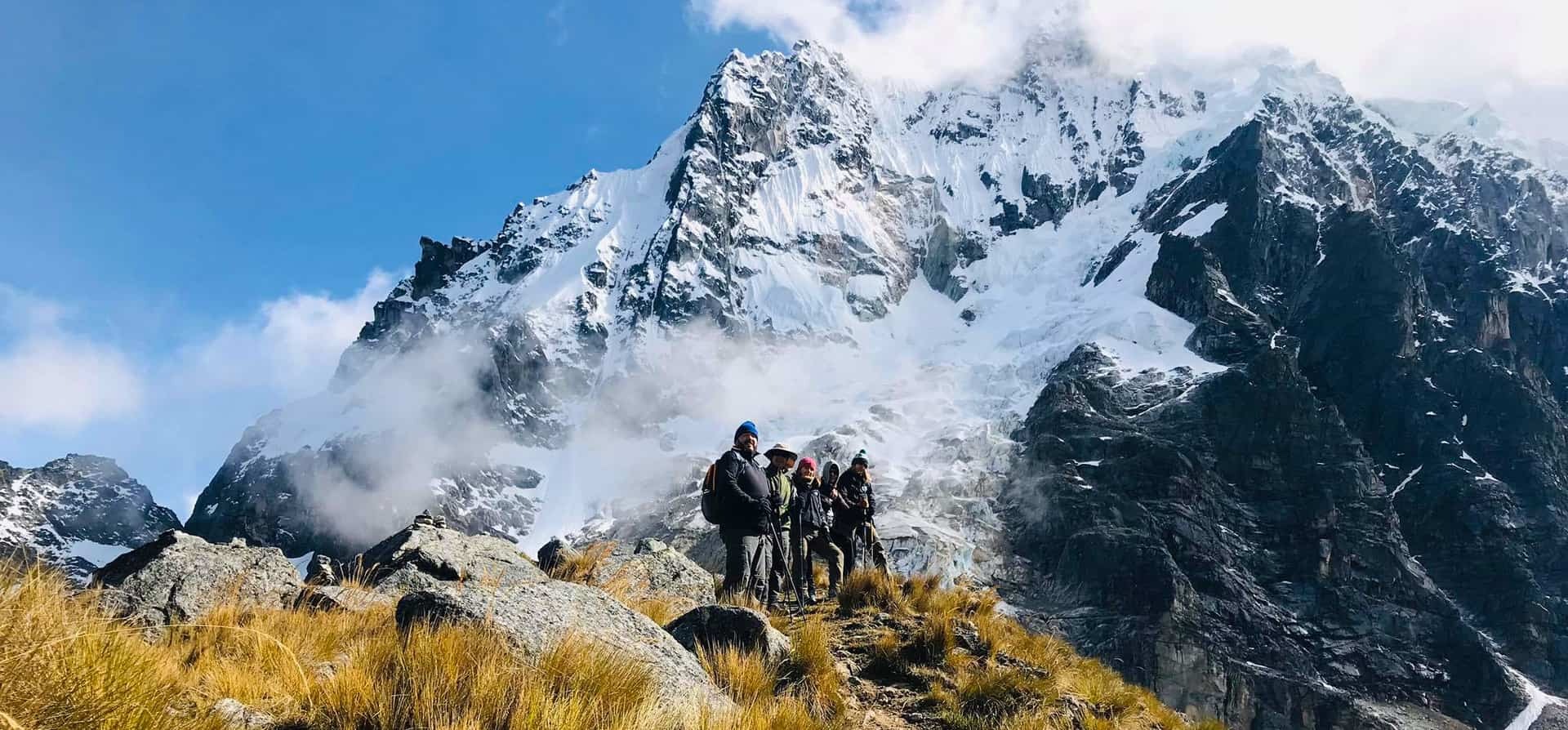
The pass day is the crux. From Soraypampa it takes about 3 to 4 hours to climb to the Salkantay Pass at 4,650 m, the highest point of the trek, and then you descend all the way to Collpapampa (about 2,850 m). In total it is about 22 km in a single day. There is no road at the pass, so if something goes wrong up there, the way out is on foot.
Start early, carry warm and waterproof layers even on a sunny morning, use sun protection (the sun is strong at altitude all year), and agree beforehand on a turn-around time. If either of you feels seriously unwell on the way up, turning back down is the right call.
Machu Picchu tickets
Buy your Machu Picchu ticket in advance for a specific date, entry time and circuit, and build your trek around it, not the other way round. Huayna Picchu and Machu Picchu Mountain are separate, limited tickets. Inside the site only small backpacks (max. 25 L) are allowed, so plan where your big pack will stay.
From Hidroeléctrica to Aguas Calientes
After the cloud forest, coffee farms and the Lucmabamba area (about 2,050 m), most independent hikers make their way down to Hidroeléctrica (about 1,880 m). From there it is about a 3-hour walk along the railway to Aguas Calientes (about 2,040 m), the town below Machu Picchu. Some travellers take the train on this stretch instead; check current departures locally. From Aguas Calientes you go up to the site by bus or on foot.
Getting back to Cusco
You have two main options: the train from Aguas Calientes to Ollantaytambo followed by road transport to Cusco, or walking back to Hidroeléctrica and taking road transport from there, which is the cheaper but longer choice. Trains can fill up in high season, so book the return when you book your Machu Picchu ticket.
Safety checklist for hiking Salkantay without a guide
- At least 2 days of acclimatization in Cusco or the Sacred Valley
- A hiking partner, or at the very least someone in Cusco who knows your exact plan and return date
- Offline map, charged phone and power bank
- Sleeping bag and layers suitable for nights below freezing near the pass
- Rain jacket and pack cover, whatever the season
- Water treatment and 1.5–2 L capacity
- Basic first-aid kit and any personal medication
- Travel insurance that covers trekking at altitude
- A turn-around time for the pass day, decided in advance
- Machu Picchu ticket and return transport already booked
For a full gear list, see our Salkantay trek packing list.
On your own vs guided trek
| On your own | Guided trek | |
|---|---|---|
| Permits and rules | No permit or guide required | No permit required; the operator handles entrance fees and tickets |
| Transport to the trailhead | You arrange it in Cusco | Hotel pick-up included |
| Carrying gear | You carry tent, food, stove and clothes | Horses carry the camping equipment and your duffel bag |
| Food | You plan, carry and cook it | Meals prepared by a cook, with vegetarian or vegan options on request |
| Nights | Your tent or lodging you find | Camps set up and waiting for you |
| Navigation | Offline maps and your own judgement | A guide who walks the route regularly |
| Altitude and emergencies | You and your partner watch for symptoms | Guides carry a first-aid kit and emergency oxygen |
| Machu Picchu logistics | You book tickets, trains and transfers | Machu Picchu ticket included; the plan is already built |
| Planning effort | High, and you need flexibility | Low: you choose dates and pack |
| Freedom | Total: your pace, your campsites | Fixed itinerary with a group |
Neither option is better for everyone. Going independently gives you freedom and full control of your budget; going guided swaps that freedom for a lighter pack, solved logistics and a safety net on the pass.
Who should go guided
In our experience, a guided trek is the better choice if:
- It is your first time hiking above 4,000 m
- You are travelling solo and do not want to cross the pass alone
- You are short on days and cannot afford a missed bus or a full train
- You are going in the rainy season, when the pass is harder and slower
- You want Machu Picchu tickets, the hotel in Aguas Calientes and the return already sorted
Going on your own makes sense if you have multi-day hiking experience at altitude, your own lightweight camping gear, flexible dates and, ideally, some Spanish to ask for directions and transport.
How our guided Salkantay treks handle it
On our treks the logistics above are taken care of. We hold a briefing in Cusco the day before departure, pick you up at your hotel and drive you to the trailhead. Horses carry the camping equipment and your duffel bag, so you walk with a light daypack. A cook prepares the meals, there is coca tea every morning and boiled water at the camps (bring 1.5–2 L for drinking during the day). You sleep in domes or panoramic cabins for two people at the camps, and in a 2★ hotel in Aguas Calientes on the last night.
Our bilingual guides carry a first-aid kit and emergency oxygen and know where to slow down on the pass day. Groups are small: a maximum of 10 people on most treks and 15 on the 5-day route. Sleeping bags and trekking poles can be rented if you do not want to bring your own.
Which Salkantay trek to choose
- For the most balanced option, the Salkantay trek 4 days to Machu Picchu includes Humantay Lake, the pass and Machu Picchu.
- If you want a gentler pace and the Llactapata viewpoint over Machu Picchu, choose the classic Salkantay trek 5 days via Llactapata.
- Strong, acclimatized hikers who are short on time can do the Salkantay trek 3 days to Machu Picchu, with a long first day.
- If you only want the mountain scenery, the Humantay Lake and Salkantay Pass 2-day trek returns to Cusco without going to Machu Picchu.
Still weighing the length? Our article on whether to do Salkantay in 4 or 5 days compares both. And whichever way you go, guided or on your own, give yourself those acclimatization days in Cusco first.
Frequently asked questions
Do you need a guide for the Salkantay trek?
No. Unlike the Inca Trail, the Salkantay trail does not require a licensed guide, so experienced hikers can walk it independently. You do take on all the logistics and your own safety at altitude.
Do you need a permit to hike Salkantay?
There is no government trekking permit for the Salkantay route. You only pay small entrance fees in soles that are collected locally along the way. Machu Picchu itself always requires a ticket with a fixed entry time.
Is it safe to hike the Salkantay trek alone?
It can be done safely by fit, acclimatized hikers with the right gear, but the pass at 4,650 m is remote and the weather changes quickly. Hiking with at least one partner, starting early and carrying warm layers makes a big difference.
Can I do the Salkantay trek on my own without a tent?
Some places along the route offer camping spots or basic lodging, but availability varies and it is tighter in the busy dry season. If you do not carry a tent, have a clear plan for every night before you set off.
How do I get to Machu Picchu at the end of an independent Salkantay trek?
Most independent hikers reach Hidroeléctrica and walk about 3 hours along the railway to Aguas Calientes. From there you go up to Machu Picchu by bus or on foot, with a ticket bought in advance for a fixed entry time.