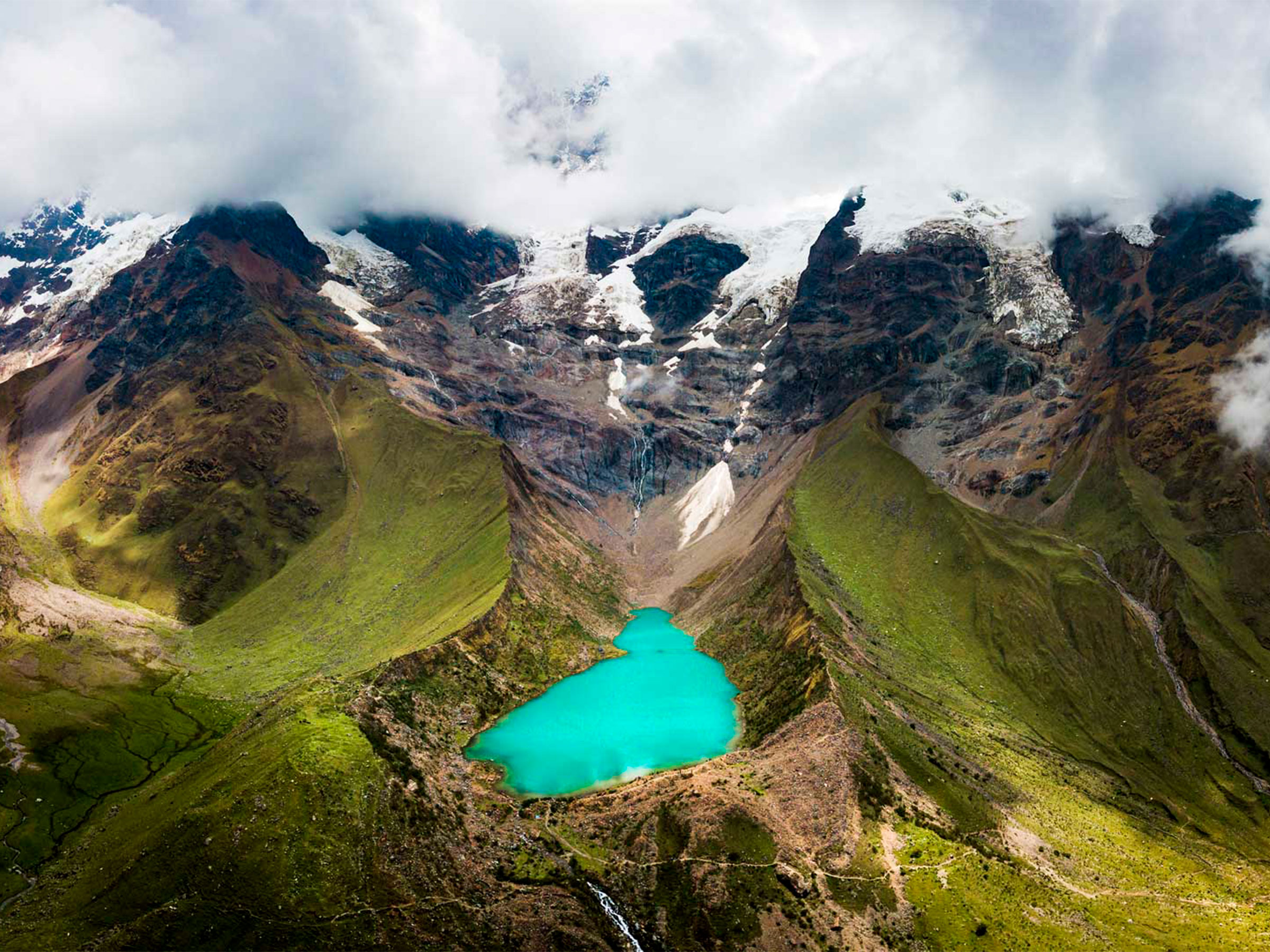
For the Salkantay trek you need warm layers for freezing nights near the 4,650 m pass, light breathable clothes for the humid cloud forest, broken-in boots, a waterproof jacket and a small daypack you carry yourself. Horses carry the camping equipment and a duffel bag of a few kilos with your things, and we provide the meals, the domes and boiled water, so you can pack lighter than you think. Below is the checklist we would give a friend, as local guides who walk this route.
If you are still choosing a route, start with our complete Salkantay trek guide and come back to this list once you know how many days you will be walking.
Why packing for Salkantay is different
The Salkantay route crosses several climates in a few days. You start around Soraypampa at about 3,900 m, climb to the Salkantay Pass at 4,650 m, then descend about 22 km to Collpapampa at about 2,850 m. The next day you are in high jungle among coffee and fruit farms near Lucmabamba (about 2,050 m), and you finish in Aguas Calientes and Machu Picchu.
That means one bag has to cover frost at dawn, wind and sometimes snow on the pass, strong sun at altitude all year, and humid, rainy cloud forest. The answer is layers, not bulk.
What we provide (so you don’t over-pack)
Before you buy anything, check what is already covered on our multi-day treks:
- Camping equipment: domes or panoramic cabins for two people at the camps (no tent to carry).
- Horses for the camping gear and your duffel bag.
- Meals prepared by our cook, with vegetarian and vegan options on request.
- Coca tea every morning and boiled water at the camps to refill bottles.
- First-aid kit and emergency oxygen, carried by your guide.
- A 2★ hotel in Aguas Calientes on the last night, with private bathroom, hot water and Wi-Fi.
- Machu Picchu entrance ticket on treks that end there.
Not included, and therefore on your list: sleeping bag and trekking poles (both can be rented), drinking water for the trail, travel insurance, and cash for extras.
Documents and money checklist
- Passport (the original, needed for your Machu Picchu ticket and the train)
- Travel insurance details, ideally covering trekking at altitude
- Printed or offline copy of your booking and Machu Picchu ticket
- Cash in soles, small notes: entrance fees on the trail, snacks, hot springs, bus to Machu Picchu, tips, last-day lunch and dinner
- A card for Aguas Calientes, but don’t rely on ATMs along the trail
Clothing: the layer system
| Layer | What to pack | When you use it |
|---|---|---|
| Base layer | 2–3 quick-dry T-shirts (synthetic or merino), 1 long-sleeve thermal top, thermal leggings | Every day; thermals for sleeping and the pass morning |
| Mid layer | Fleece or light synthetic jacket | Cold mornings, evenings at camp |
| Insulation | Warm down or synthetic jacket | Nights at Soraypampa and the pass day |
| Shell | Waterproof, breathable rain jacket (and rain trousers in wet months) | Rain in the cloud forest, wind on the pass |
| Legs | 2 pairs of hiking trousers (zip-offs are handy), 1 pair of shorts | Trousers up high, shorts in the jungle section |
| Extremities | Warm hat, sun hat or cap, buff, warm gloves | Hat and gloves for the pass, sun hat every day |
| Socks & underwear | 4–5 pairs of hiking socks, quick-dry underwear | Change socks daily to avoid blisters |
Add a set of dry clothes you only wear at camp and to sleep. Putting on something dry at night makes a big difference at altitude.
Footwear
- Hiking boots, already broken in, with good grip. The descent after the pass is long and rocky, and the trail gets muddy in the rainy season.
- Light camp shoes or sandals to rest your feet in the evening and for the hot springs.
- Blister kit: tape or blister plasters. Your guide carries a first-aid kit, but blister care is personal.
Trail running shoes can work for experienced hikers in the dry season; if you are unsure, choose boots. For how hard the walking actually is, read our article on Salkantay trek difficulty.
Daypack vs duffel bag
You split your things between two bags:
Daypack (you carry it, 20–25 L)
- Water bottles or hydration bladder (1.5–2 L)
- Rain jacket and a warm layer
- Sunscreen, lip balm with SPF, sunglasses, sun hat
- Snacks for the day
- Camera or phone, small power bank
- Personal medicines, tissues and hand sanitizer
- Rain cover or a liner bag
Duffel bag (the horses carry it)
- Sleeping clothes, spare layers, socks and underwear
- Toiletries in a small bag
- Headlamp (keep it handy for the early starts)
- Camp shoes
- Sleeping bag, if you bring your own
We confirm the exact weight allowance for your duffel bag at the briefing in Cusco. You won’t see your duffel during the day; the horses go ahead and it waits for you at camp. Anything you might need while walking goes in the daypack.
Leave the rest of your luggage in Cusco: ask your hotel to store it until you return.
Sleeping bag and trekking poles: rent or bring?
Neither is included, and both can be rented.
- Sleeping bag: renting saves you carrying a bulky bag all the way to Peru. If you already own a warm one and plan other high-altitude hikes, bring it. A thin liner adds warmth and hygiene either way.
- Trekking poles: we recommend them for almost everyone. They take pressure off your knees on the descent from the pass to Collpapampa and help on wet, slippery stretches in the cloud forest. Rented poles are fine if you don’t want to fly with your own.
Health, first aid and altitude
Altitude is the biggest factor on Salkantay. Spend at least two days in Cusco or the Sacred Valley before the trek, drink plenty of water, eat light and avoid alcohol for the first days.
- Your personal medication, in the original packaging
- Pain relief for headaches
- Anything your doctor recommends for altitude
- Stomach remedies and oral rehydration salts
- High-SPF sunscreen and lip balm (the sun is strong at altitude all year)
- Insect repellent for the cloud forest and Aguas Calientes
- Hand sanitizer, toilet paper and a small bag for rubbish
Headache, nausea, shortness of breath and poor sleep are common altitude symptoms. Tell your guide early; they carry emergency oxygen and will help you decide. If symptoms get worse, the answer is to descend. People with heart or lung conditions, or who are pregnant, should talk to a doctor before booking.
Water and snacks
- Two 1-liter bottles or a 2-liter bladder
- Optional purification tablets or a filter for extra peace of mind
- Energy snacks you like: nuts, chocolate, dried fruit, bars
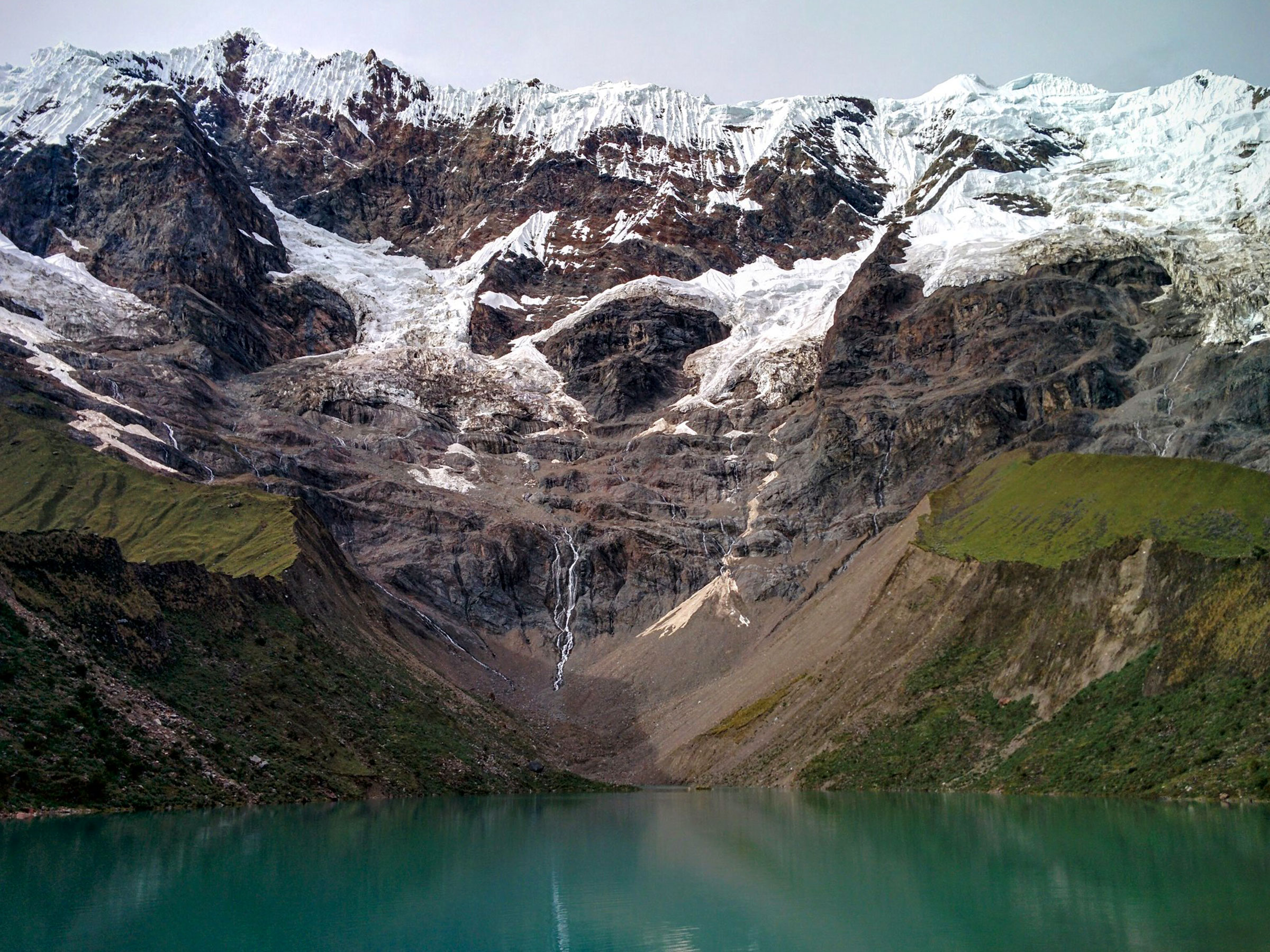
Drinking water on the trail is not included, so fill up with boiled water at camp before you start walking. Our cook prepares your meals, so snacks are only for the hours between them. Don’t count on buying anything on the Humantay Lake trail: there are no food or drink vendors there.
Electronics
- Phone with offline maps and photos backed up
- Power bank, fully charged in Cusco
- Headlamp with spare batteries
- Camera and spare battery (cold drains batteries fast, so keep them in your sleeping bag at night)
- Charging cables and an adapter for Peru
Plan to be self-sufficient with a power bank until you reach the hotel in Aguas Calientes, where you can recharge everything.
Machu Picchu day
Only small backpacks, up to 25 L, are allowed inside Machu Picchu. That is why we recommend a 20–25 L daypack for the whole trek: the same bag works on the last day. Leave everything else at the hotel or with your duffel.
- Passport and Machu Picchu ticket
- Rain jacket, sun hat, sunscreen
- Water and a small snack
- Cash for the bus and for lunch and dinner afterwards
If you add Huayna Picchu or Machu Picchu Mountain (optional, extra cost and subject to availability), wear your hiking boots; both have steep stone steps.
Rainy-season extras (December to March)
- Rain trousers as well as the jacket
- A poncho that covers you and your daypack
- Waterproof backpack cover and dry bags inside your duffel
- Extra socks (dry socks every evening are worth the space)
- Quick-dry trousers instead of heavier ones
- Gaiters if you want to keep mud out of your boots
The cloud forest is humid and can rain in any month, so a waterproof shell is on the list all year. For a full picture of the seasons, see our guide to the best time to hike the Salkantay trek.
What NOT to bring
- Jeans and cotton clothes: they stay wet and cold.
- A big suitcase: it won’t go on the trail; store it in Cusco.
- A tent, stove or cooking gear: we take care of camping and meals.
- Large backpacks for Machu Picchu: over 25 L won’t be allowed in.
- Too many “just in case” clothes: you only need one dry camp outfit and a spare base layer.
- Valuables you don’t need: leave jewellery and extra electronics in safe storage in Cusco.
Which trek are you packing for?
The list above works for every multi-day Salkantay route; only the number of socks changes. On the Salkantay trek 4 days to Machu Picchu you visit Humantay Lake, cross the pass and reach Machu Picchu with a compact bag. On the classic Salkantay trek 5 days via Llactapata you spend an extra night near the coffee farms around Lucmabamba, so pack an extra base layer and a swimsuit for the optional Cocalmayo hot springs.
Not sure how many days suit you? Compare them in Salkantay trek: 4 or 5 days? and bring any gear questions to the pre-trek briefing in Cusco the day before you leave.
Frequently asked questions
Do I need to bring my own sleeping bag for the Salkantay trek?
A sleeping bag is not included, but you can rent one from us. If you bring your own, make sure it is warm enough for nights that often drop below freezing near the pass in the dry season.
How much can the horses carry for me on the Salkantay trek?
Horses carry the camping equipment plus a duffel bag of a few kilos with your personal things. We confirm the exact limit at the briefing in Cusco the day before departure.
Are trail running shoes enough for the Salkantay trek?
Some fit hikers do it in sturdy trail shoes, but most people are better off in broken-in hiking boots with good grip and ankle support, especially for the long, rocky descent after the pass and in muddy months.
What size backpack is allowed inside Machu Picchu?
Only small backpacks are allowed inside Machu Picchu, up to 25 liters. A 20 to 25 liter daypack works for the whole trek and for the Machu Picchu visit.
How much water should I carry each day on the Salkantay trek?
Carry 1.5 to 2 liters. Drinking water on the trail is not included, but there is boiled water at the camps to refill your bottles each morning and evening.
Should I bring cash on the Salkantay trek?
Yes, bring Peruvian soles in small notes for the local entrance fees, snacks, the optional hot springs, the bus to Machu Picchu, tips and your last lunch and dinner, which are not included.