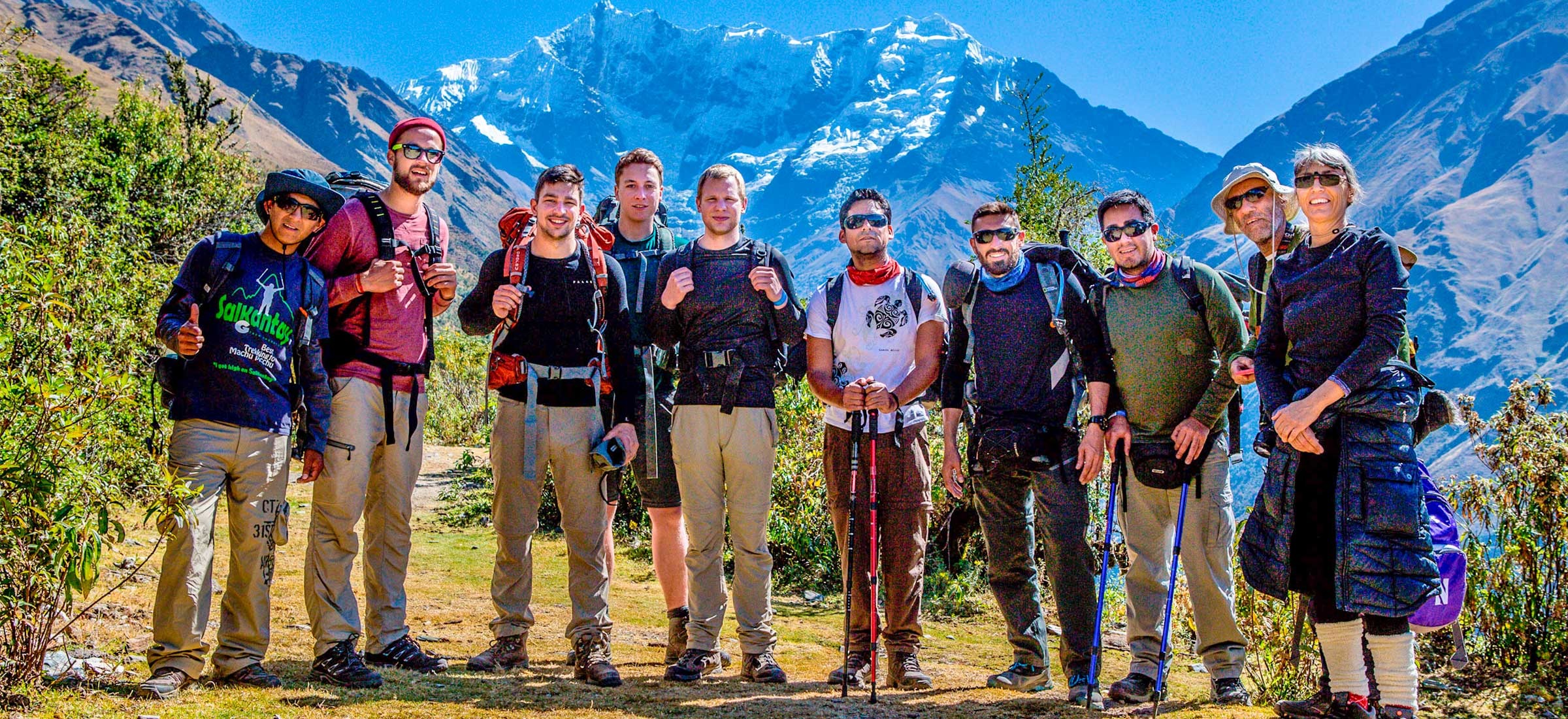
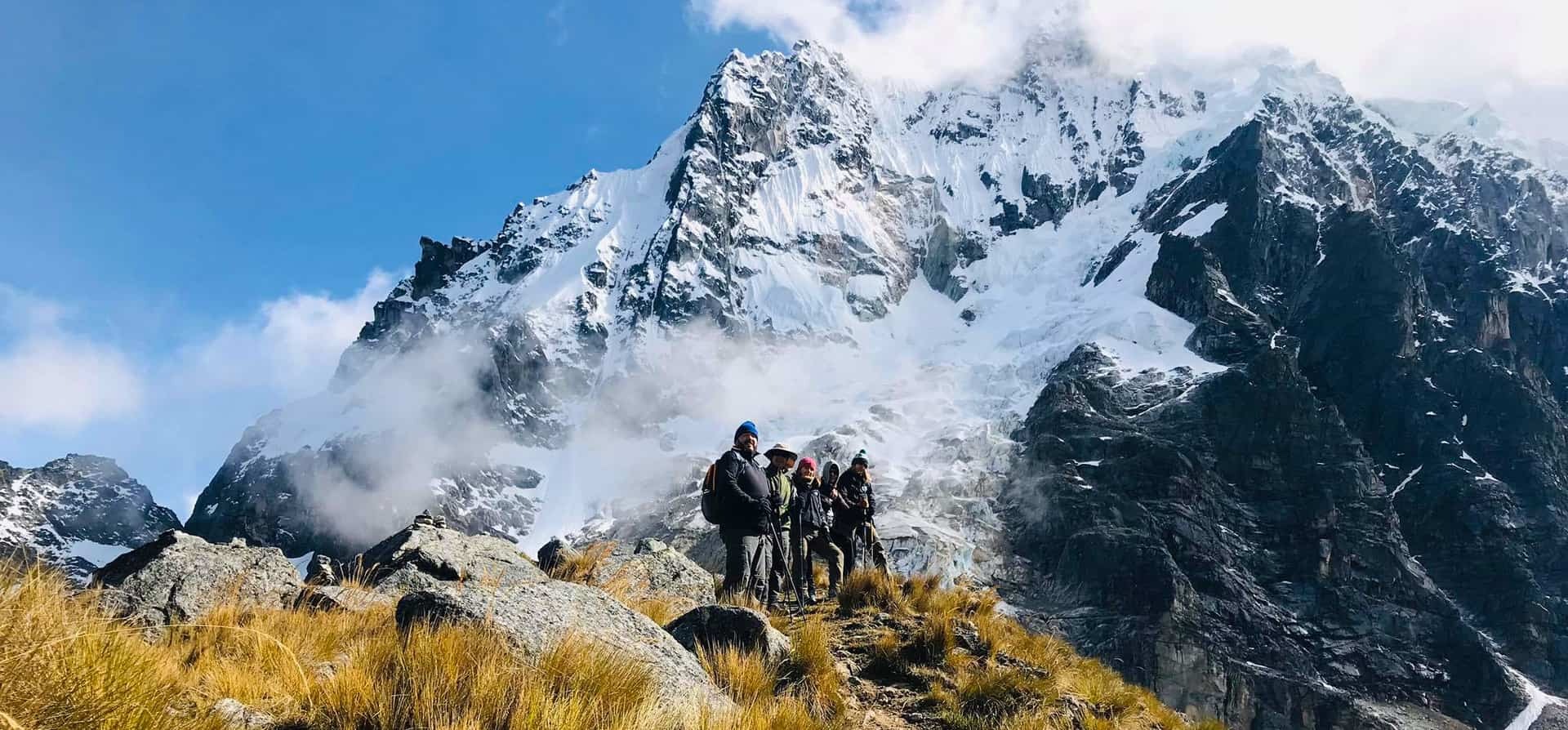
The Salkantay Trek is moderate to challenging: no climbing skills are needed, but you walk long days at high altitude, cross a pass at 4,650 m and then face a long descent. Most reasonably fit people who acclimatize properly complete it. What makes it hard is the thin air, not the trail itself.
We guide this route from Cusco with daily departures, and below we break down exactly where the effort lies so you can judge whether it suits you. For the full overview of routes, seasons and logistics, start with our complete Salkantay trek guide.
Overall rating: moderate to challenging
We rate our Salkantay treks as moderate, and our tour descriptions add “moderate to challenging” because one day stands out. The trail is a well-used path. There’s no scrambling, no ropes and no technical sections. Climbing Salkantay mountain itself (6,271 m) is a technical expedition, but that’s not part of the trek.
The difficulty comes from three things:
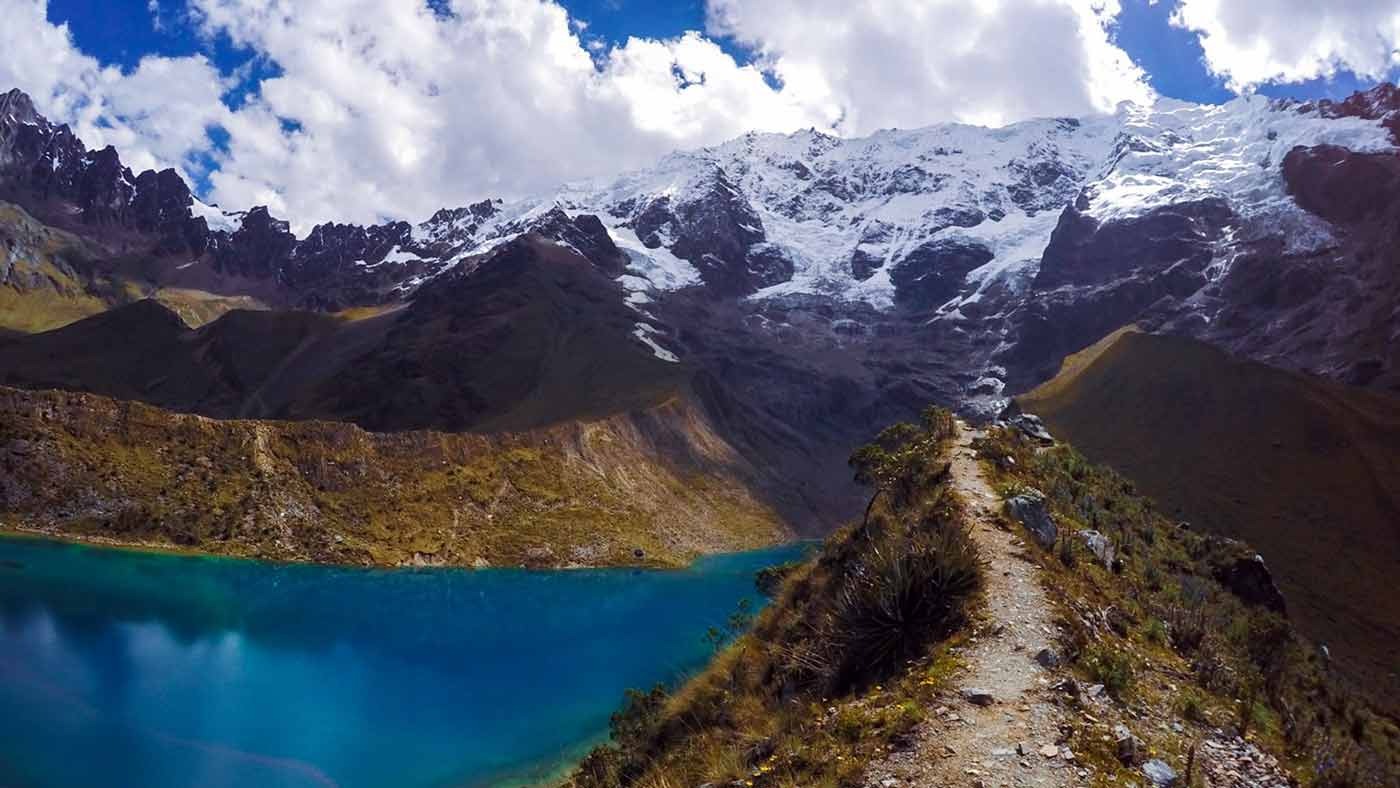
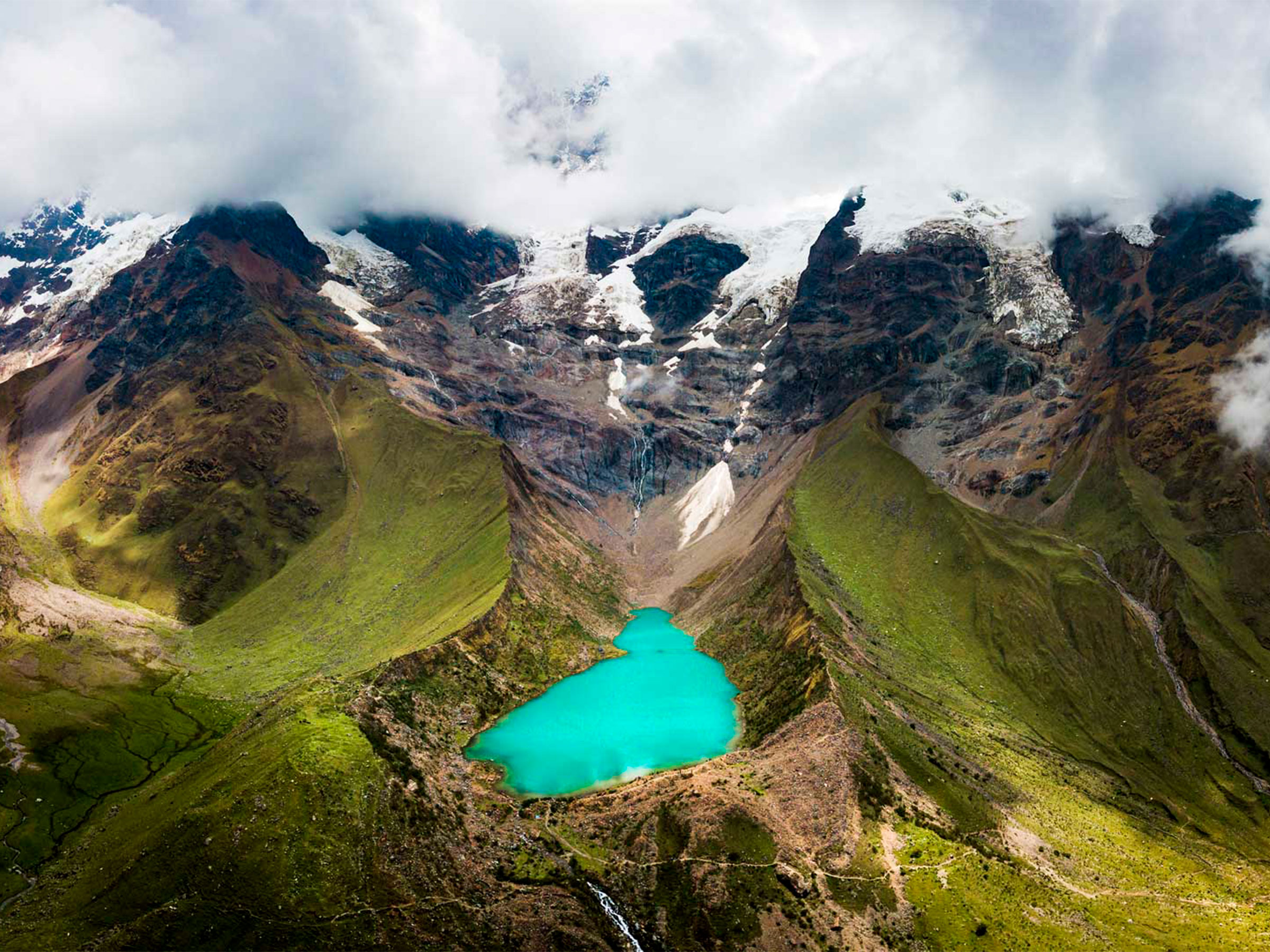
- Altitude. The first camp at Soraypampa is already around 3,900 m, Humantay Lake is about 4,200 m and the pass is 4,650 m.
- One very long day. The pass day covers about 22 km.
- Big descents. After the pass you drop around 1,800 m to Collpapampa, which is hard on knees and thighs.
Why altitude matters more than distance
At sea level, 22 km on a good path is a long but manageable day for many hikers. At 4,000 m and above, every step costs more: you breathe harder, walk slower and recover less well. That’s why fit runners sometimes struggle more than steady walkers who take it slowly.
Acclimatization is the single most important thing you can do. Spend at least two days in Cusco (about 3,400 m) or the Sacred Valley before the trek. Drink plenty of water, eat light, avoid alcohol for the first days and don’t rush around the city. On our 4- and 5-day treks the first afternoon at Humantay Lake also works as an acclimatization hike before the pass.
The hardest day: the Salkantay Pass
On the 4-, 5- and 6-day treks, day two is the big one. In broad terms, it goes like this:
- Early start at Soraypampa. You wake up with coca tea and breakfast at around 3,900 m. It’s cold before the sun hits the valley, especially in the dry season.
- The climb (about 3–4 hours). A steady ascent to the Salkantay Pass at 4,650 m. This is where the altitude bites. The trick is a slow, even rhythm and short, regular stops. Our guides set the pace for the group, not for the fastest walker.
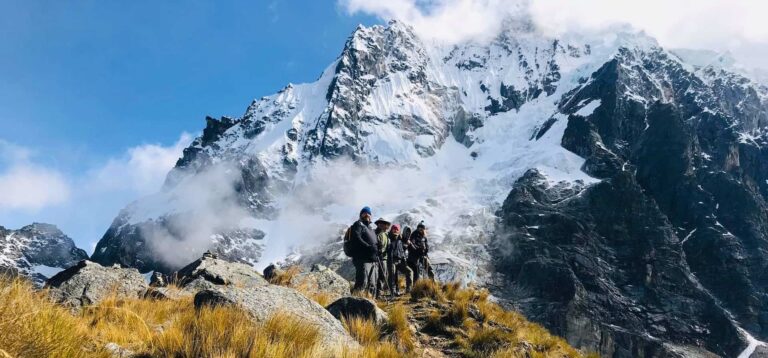
- At the pass. Time to rest, take photos and enjoy the view of Salkantay, Humantay and other snow peaks.
- The descent begins. You pass Salkantaypampa and the small Soyrococha lagoon, then stop for lunch at Wayracmachay.
- The long afternoon. The trail keeps descending to the camp at Collpapampa (around 2,850 m). The air gets warmer and thicker, the vegetation turns green, and your legs feel every metre.
By the time you arrive you’ll have walked about 22 km. Expect to be tired, sleep well and feel proud.
The long descent
Many people focus on the climb and underestimate the way down. From the pass to Collpapampa you lose around 1,800 m in one afternoon, and on the 5-day route the descent continues the next days through the cloud forest and later from Llactapata (around 2,736 m) down to Hidroeléctrica (around 1,880 m).
Descents are where knees, toes and thigh muscles suffer. A few things help a lot:
- Trekking poles. They’re not included in the trek, but you can rent them. We strongly recommend them for the descents.
- Well broken-in boots with good grip, and nails trimmed short.
- Short steps and a controlled pace instead of rushing downhill.
Day-by-day effort on the 5-day trek
Here’s how the effort feels on our classic 5-day Salkantay Trek via Llactapata:
| Day | Route | Distance / altitude | Effort |
|---|---|---|---|
| 1 | Cusco → Mollepata → Soraypampa, hike to Humantay Lake | Humantay ~3–4 h round trip; lake at about 4,200 m | Moderate: short but steep, first real altitude test |
| 2 | Soraypampa → Salkantay Pass → Collpapampa | 22 km; up to 4,650 m, down to ≈ 2,850 m | Hard: the longest and highest day |
| 3 | Collpapampa → Lucmabamba, coffee tour (optional Cocalmayo hot springs) | 14 km; down to ≈ 2,050 m | Easy to moderate: warmer, mostly losing height |
| 4 | Lucmabamba → Llactapata → Hidroeléctrica → Aguas Calientes | 18 km; up to ≈ 2,736 m, down to ≈ 1,880 m, then ~3 h along the railway | Moderate: a climb, a steep descent and a long flat finish |
| 5 | Machu Picchu guided tour, free time | Machu Picchu ≈ 2,430 m | Easy: walking and stairs inside the site |
How the 3-, 4- and 6-day treks compare
- 3 days: the hardest version. You cross the pass on day one, with a climb of about 4 hours from Soraypampa and 22 km in total, without a night at altitude first and without Humantay. Choose it only if you’re already well acclimatized and walk long distances comfortably.
- 4 days: Humantay on day one, then the same 22 km pass day, and on day three you continue through the cloud forest to Hidroeléctrica and Aguas Calientes. It skips Llactapata, so it’s more compact than the 5-day. Our article on whether to do Salkantay in 4 or 5 days goes into the trade-offs.
- 6 days: more total walking (9 km, then 22 km over the pass to Chaullay, then 18 km to Lucmabamba, then Llactapata and the short Inca Trail), but the extra day spreads it out. The pass day is just as demanding.
On every version, the pass day is the same challenge. More days don’t make that day easier, but they do give you more recovery around it.
Who can do the Salkantay Trek
Beginners. Yes, if you’re healthy and walk regularly. You don’t need trekking experience, but you should be able to walk for several hours on consecutive days. The 3-day version is not a good first trek.
Older hikers. There’s no reason age alone should stop you. Fitness, walking experience and acclimatization matter far more than the number on your passport. If you have a heart or lung condition, or any doubt about your health at altitude, talk to your doctor before booking.
Kids and teenagers. It depends a lot on the child. Children who already hike and enjoy it can manage, but altitude affects everyone and young children don’t always say clearly how they feel. Ask your paediatrician first and talk to us before booking so we can tell you honestly whether the route suits your family.
Pregnant travellers should ask their doctor before planning any trek at this altitude.
How to prepare in the weeks before
You don’t need a special programme, just consistent walking. In the weeks before your trip:
- Walk often, and walk long. Build up to several hours at a time, ideally on hills.
- Do back-to-back days. Two or three walking days in a row teach your legs what a multi-day trek feels like.
- Practise going downhill. Stairs and descents strengthen the muscles that protect your knees.
- Add cardio. Cycling, swimming, running or stair climbing all help your heart and lungs.
- Carry a daypack with the weight of 1.5–2 litres of water and your layers.
- Break in your boots. Never start the trek in new footwear.
Our Salkantay packing list covers the gear that makes those long days more comfortable.
Warning signs: when to slow down or stop
Mild headache and breathlessness on the climbs are normal at altitude. Tell your guide right away if you notice:
- A headache that gets worse or doesn’t go away with rest.
- Nausea or vomiting.
- Shortness of breath even while resting.
- Unusual tiredness, confusion or loss of balance.
- Very poor sleep combined with any of the above.
If symptoms get worse, the treatment is to descend. Our guides carry a first-aid kit and emergency oxygen, and they will always choose safety over reaching the pass. Never hide symptoms to keep up with the group.
Horses and support on the trail
You don’t carry your luggage. Horses carry the camping equipment and your duffel bag of a few kilos with personal things, so you only walk with a daypack: water (1.5–2 L, not included), rain gear, warm layers, sun protection and snacks. A professional cook prepares the meals, there’s coca tea every morning and boiled water at camp.
For the climb to Humantay Lake, horses can be rented at the start for the way up (paid locally). If you think you may need extra help on the pass day, tell us when you book or at the briefing in Cusco the day before, so we can tell you what’s possible on your date.
Which trek fits your fitness
If you want the most balanced pace, our 4-day Salkantay Trek to Machu Picchu and the classic 5-day route via Llactapata both give you an acclimatization afternoon at Humantay before the pass. Leave the 3-day Salkantay Trek for strong, already acclimatized hikers. And if you’re choosing your dates, check our guide to the best time for the Salkantay Trek too: dry trails make every day a little easier.
Frequently asked questions
Can a beginner do the Salkantay Trek?
Yes, if you are in reasonable health, walk regularly before the trip and acclimatize in Cusco first. You don’t need technical skills, but you do need to be ready for long days at altitude.
What is the hardest part of the Salkantay Trek?
The pass day: about 22 km, climbing from Soraypampa (around 3,900 m) to the Salkantay Pass at 4,650 m and then descending to Collpapampa (around 2,850 m).
Is the Salkantay Trek harder than the Inca Trail?
Most people find it harder because it goes higher: 4,650 m at the Salkantay Pass versus 4,215 m at Dead Woman’s Pass on the Inca Trail. The Inca Trail has more stone steps.
How many days should I acclimatize before the Salkantay Trek?
Spend at least two days in Cusco or the Sacred Valley before starting. Hydrate, eat light, avoid alcohol and take it easy those first days.
Do I have to carry my own luggage on the Salkantay Trek?
No. Horses carry the camping equipment and a duffel bag of a few kilos with your personal things. You only carry a daypack with water, layers and snacks.