Salkantay is a 6,271 m snow peak, the highest mountain of the Vilcabamba range in the Cusco region of Peru. Its name is usually explained as Wild Mountain, from the Quechua word sallqa, and it is one of the most important apus, or sacred mountains, in Andean tradition. You do not climb it on the Salkantay trek: the trail crosses the Salkantay Pass at 4,650 m, right below the mountain, which is as close as most travellers ever get.
Our guides walk beneath Salkantay many times a year, and it never gets old. This article is about the mountain itself: its height, its name, its place in local belief and how to see it well. For routes, days and logistics of the hike, read our complete Salkantay trek guide.
Salkantay mountain: quick facts
| Height | 6,271 m |
| Mountain range | Vilcabamba range (Cordillera Vilcabamba), of which it is the highest peak |
| Location | Cusco region, southern Peru, between Cusco and Machu Picchu |
| Other spelling | Salcantay |
| Name | Commonly explained from Quechua sallqa, wild or untamed: Wild (or Savage) Mountain |
| Cultural role | One of the most important apus (sacred mountains) of the Andes |
| First ascent | 1952 |
| Climbing | Technical mountaineering expedition, not part of the trek |
| Closest point on the trek | Salkantay Pass, 4,650 m |
| Best viewpoints for hikers | Soraypampa (about 3,900 m) and the Salkantay Pass |
Where is Salkantay mountain?
Salkantay rises in the Vilcabamba range, a chain of glaciated peaks in the Cusco region, on the high ground between the city of Cusco (about 3,400 m) and Machu Picchu (about 2,430 m). From the road through Mollepata you start to see its white summit long before you reach the trail.
What makes the area so striking is the drop around it. On one side there are cold, high valleys with grassland and glaciers; on the other, the land falls steeply into cloud forest, coffee farms and the warm valleys that lead to Machu Picchu. The Salkantay trek follows exactly that transition, from the ice of the pass down to the orchids and fruit trees of the high jungle.
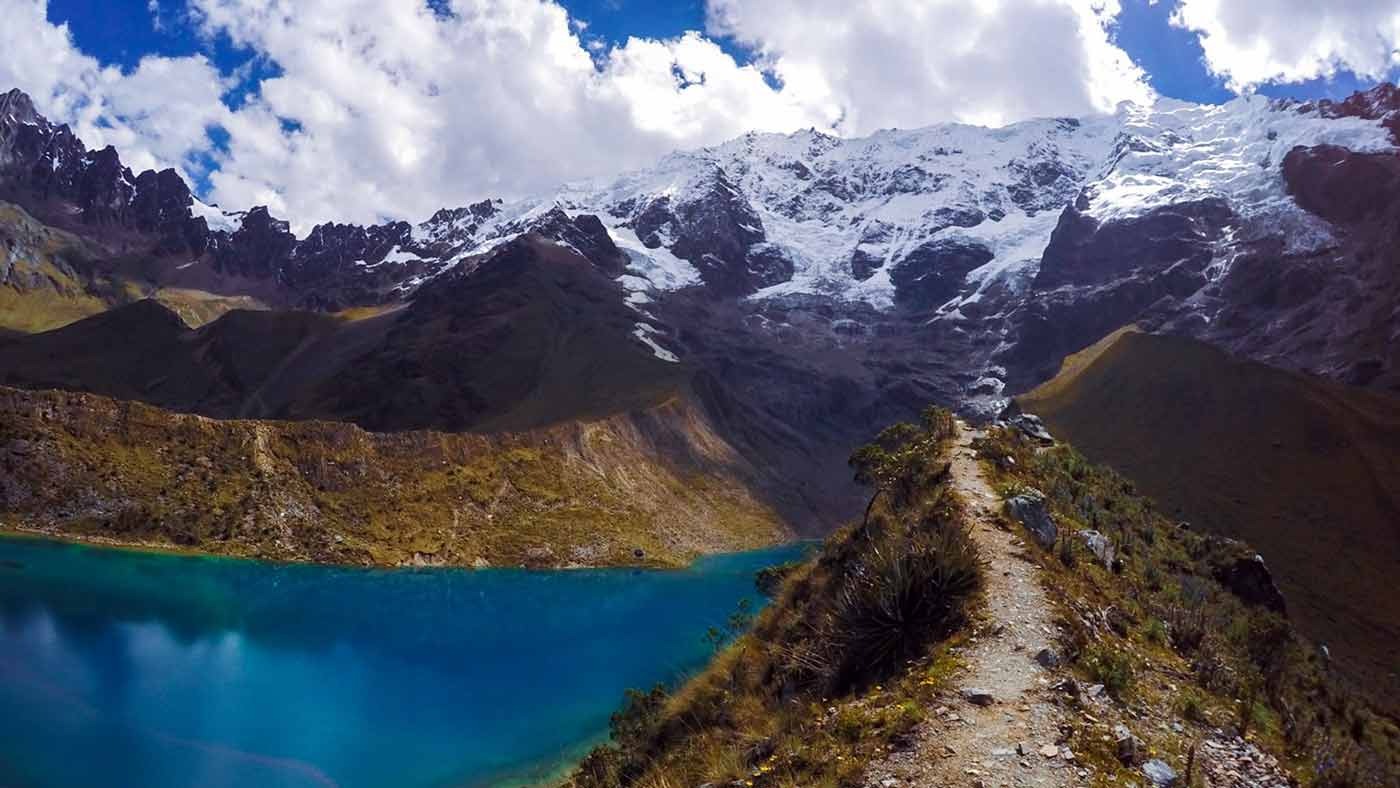
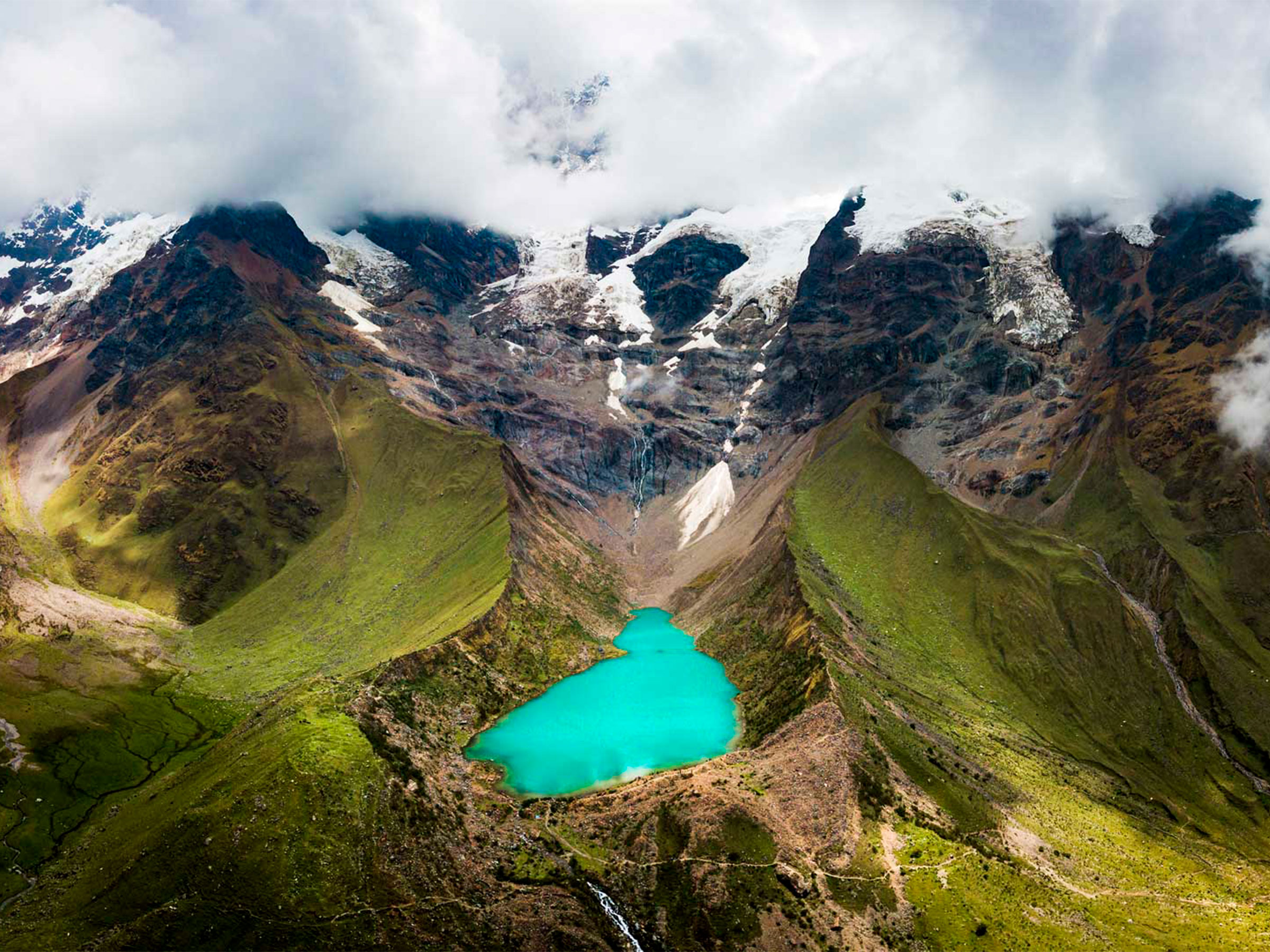
Salkantay does not stand alone. On a clear day near the pass you also see Humantay mountain, the peak above the turquoise Humantay Lake, and other snow peaks of the range, including Pumasillo on some views.
What does Salkantay mean?
The most common explanation links the name to the Quechua word sallqa, which means wild or untamed. That is why you will see it translated as Wild Mountain or Savage Mountain. Anyone who has stood on the pass in a cold wind, with clouds pouring over the ridge and the ice right above, tends to agree that the name fits.
You will also see the spelling Salcantay. Both refer to the same mountain; the spelling with k follows the way Quechua is usually written today.
Salkantay as an apu: a sacred mountain
In Andean tradition, the great snow peaks are apus: powerful, protective mountain spirits connected to the communities that live below them. Salkantay is considered one of the most important apus of the Cusco region. Many people in the Andes still show respect to the apus and to Pachamama, Mother Earth, with offerings, often including coca leaves. For them the mountain is not just scenery but a living presence that watches over the land, the water and the animals.
You do not need to know the details to feel the meaning of the place. A few simple ways to be respectful:
- If you see an offering or someone giving thanks to the mountain, give them space and keep quiet for a moment; ask your guide if you are curious about its meaning.
- Leave stones, plants and anything you find where they are.
- Respect local rules at sacred places. At Humantay Lake, for example, swimming is not allowed because local communities consider the lake sacred.
- Ask before photographing people, especially in the villages.
The first ascent and why climbing Salkantay is a different world
Salkantay was first climbed in 1952. Even today, reaching the 6,271 m summit is a technical mountaineering expedition, not a hike. It involves glaciers, crevasses, steep snow and ice, and the cold and thin air of more than 6,000 m. Climbers need mountaineering experience, specialist equipment such as crampons, ice axes and ropes, and a team that knows the mountain.
That is a completely different activity from the Salkantay trek. Our treks do not go to the summit; they cross the mountain’s shoulder at the Salkantay Pass and continue to Machu Picchu. If you want to stand on top of Salkantay, look for a specialised mountaineering expedition and plan proper acclimatization and training for it.
Salkantay mountain vs the Salkantay trek
This is the most common confusion we hear in Cusco. When people say they are doing Salkantay, they almost always mean the Salkantay trek, not a summit climb.
| Salkantay mountain | Salkantay trek | |
|---|---|---|
| What it is | A 6,271 m glaciated peak | A multi-day hike past the mountain to Machu Picchu |
| Highest point | 6,271 m summit | Salkantay Pass, 4,650 m |
| Skills needed | Technical mountaineering on ice and snow | Good fitness and acclimatization, no climbing skills |
| Equipment | Crampons, ice axes, ropes, mountaineering gear | Hiking boots, warm layers, rain gear |
| Who goes | Experienced mountaineers | Fit hikers, from first-timers at altitude to experienced trekkers |
The trek’s highest point is about 1,600 m below the summit, but it is still a serious day: the climb from Soraypampa to the pass takes 3 to 4 hours, and the full pass day to Collpapampa is about 22 km. Our article on Salkantay trek difficulty explains what to expect.
How to see Salkantay up close
You can enjoy the mountain at very different levels of effort.
From Soraypampa
Soraypampa (about 3,900 m) is the first camp on most treks and the base for Humantay Lake. It sits at the foot of Salkantay, and on clear days the mountain fills the view from camp, especially in the early morning. Even the Humantay Lake full-day tour reaches Soraypampa, so weather permitting you get a look at Salkantay on a single day out of Cusco. Read more in our Humantay Lake guide.
From the Salkantay Pass
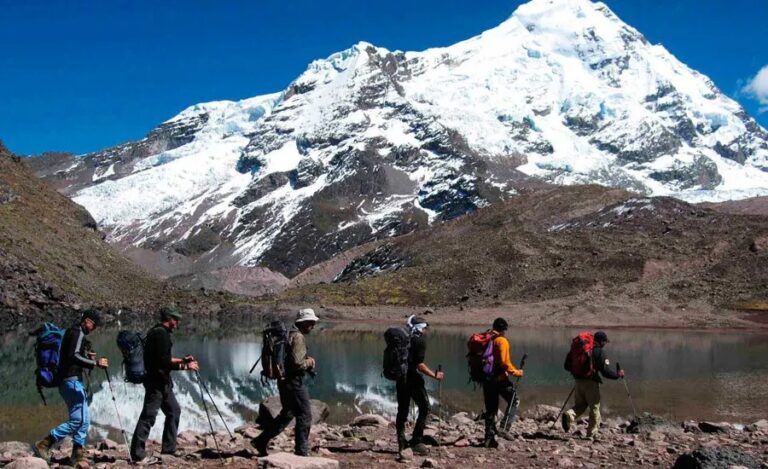
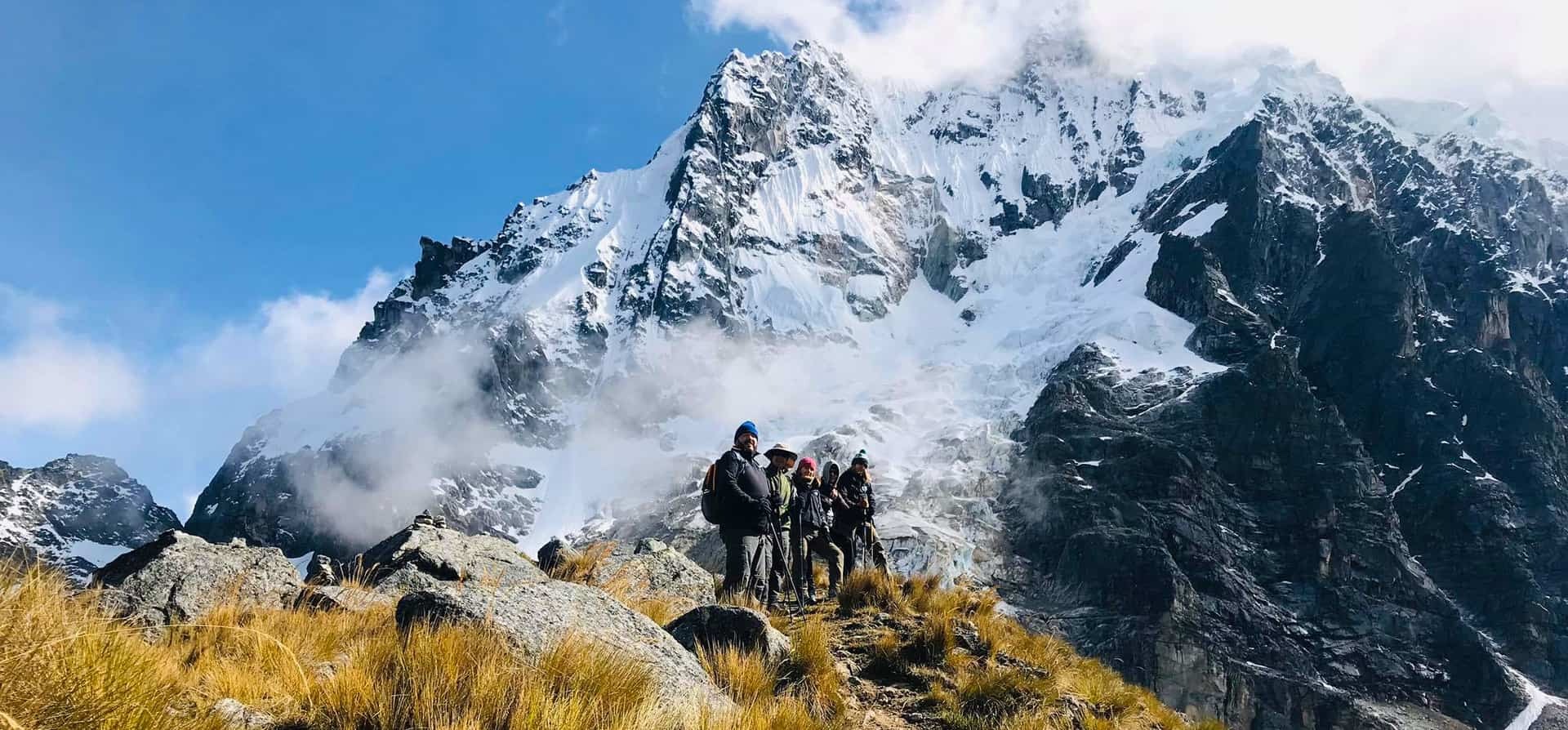
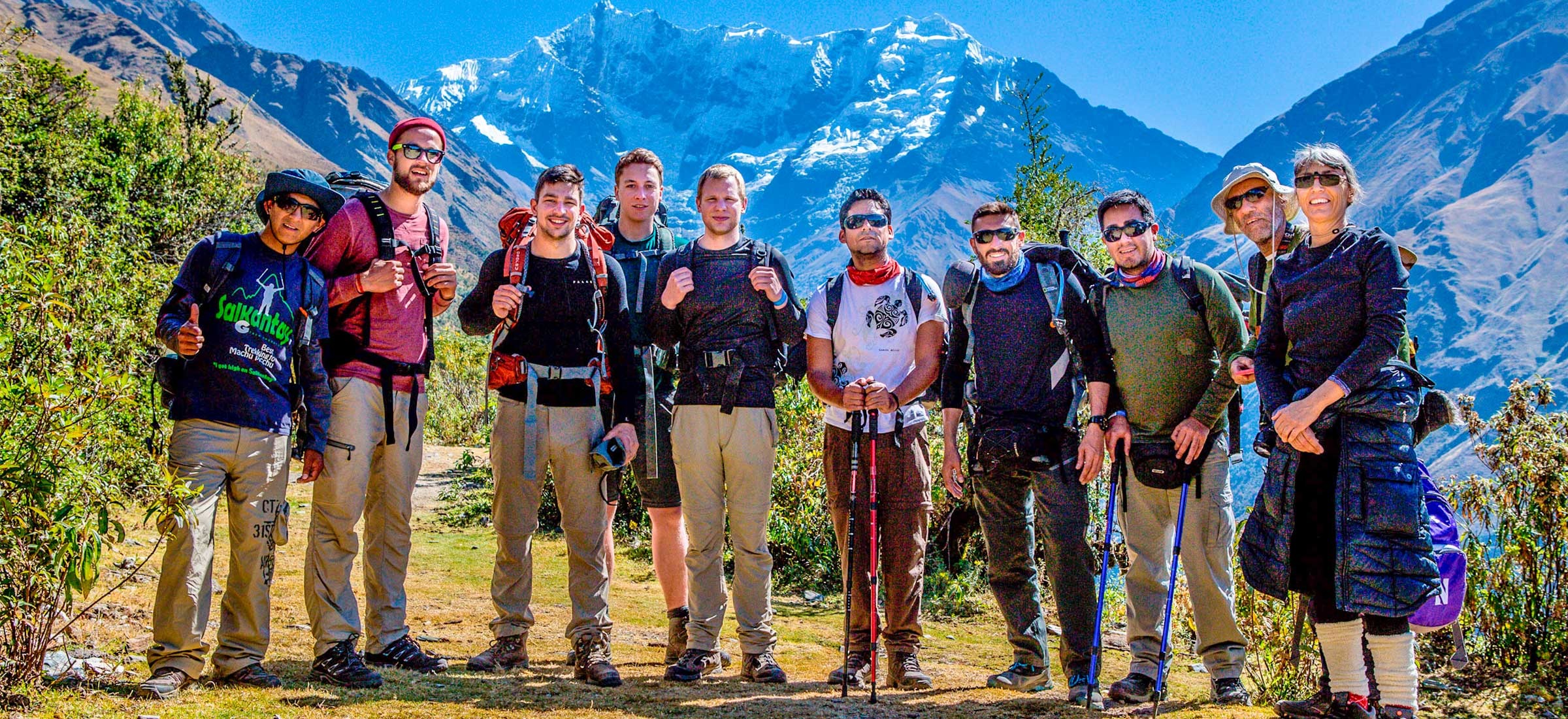
The Salkantay Pass at 4,650 m is the closest most travellers get, and the highlight of the trek. From the pass you look straight at the mountain’s ice and, on a clear day, at Humantay and other snow peaks around you. It is a cold, windy and emotional spot, and most people take a long break there.
On a 2-day trek
If you want the mountain without the full trek to Machu Picchu, the Humantay Lake and Salkantay Pass 2-day trek is made for that. On day 1 you visit Humantay Lake and sleep in Sky Domes at Soraypampa below Salkantay; on day 2 you cross the pass and return to Cusco.
On the full trek to Machu Picchu
The multi-day treks combine the mountain with everything that comes after it: the descent into cloud forest, the coffee farms and Machu Picchu at the end. The Salkantay trek 5 days via Llactapata is our classic route, with an extra viewpoint over Machu Picchu from the Llactapata Inca site. The Salkantay trek 4 days to Machu Picchu fits the same highlights into one day less.
Photo tips for Salkantay
- Shoot early. Mornings tend to be the clearest; clouds often build over the peaks as the day goes on.
- Pick the dry season if views matter most. From roughly May to September skies are usually clearer. In the rainy season, December to March, clouds often hide the summit, although the valleys are greener. Our guide to the best time for the Salkantay trek has the month-by-month picture.
- Use people for scale. A hiker on the trail or a horse caravan in the foreground shows how big the mountain really is.
- Look for reflections. The small lagoon at Soyrococha, after the pass, and the water at Humantay Lake give you a different frame.
- Protect your batteries. Cold drains them fast; keep spares in an inside pocket and charge everything at camp when you can.
- Mind the light. Snow and strong high-altitude sun can overexpose photos; check your screen and adjust exposure if the glacier looks blown out.
Which trek to choose to see Salkantay
If seeing the mountain is your main goal and your time is short, choose the Humantay Lake and Salkantay Pass 2-day trek. If you want the mountain and Machu Picchu in one journey, go for the 5-day classic via Llactapata or the 4-day route. Whichever you pick, give yourself at least 2 days in Cusco to acclimatize first; Salkantay looks even better when you are feeling good on the pass.
Frequently asked questions
How high is Salkantay mountain?
Salkantay is 6,271 m high. It is the highest peak of the Vilcabamba range in the Cusco region of Peru.
What does Salkantay mean?
The name is commonly explained from the Quechua word sallqa, meaning wild or untamed, so Salkantay is usually translated as Wild Mountain or Savage Mountain.
Do you climb Salkantay mountain on the Salkantay trek?
No. The trek crosses the Salkantay Pass at 4,650 m, below the mountain. Reaching the 6,271 m summit is a separate technical mountaineering expedition with glacier and ice climbing.
Where is Salkantay mountain located?
Salkantay stands in the Vilcabamba range of the Andes, in the Cusco region of southern Peru, on the high ground between the city of Cusco and Machu Picchu.
What is the best way to see Salkantay up close without a long trek?
The 2-day Humantay Lake and Salkantay Pass trek takes you to the foot of the mountain and over the 4,650 m pass, then back to Cusco. On clear days the mountain is also visible from Soraypampa, the base for Humantay Lake.
When was Salkantay first climbed?
The first ascent of Salkantay was made in 1952. It is still considered a serious climb that only experienced mountaineers attempt.