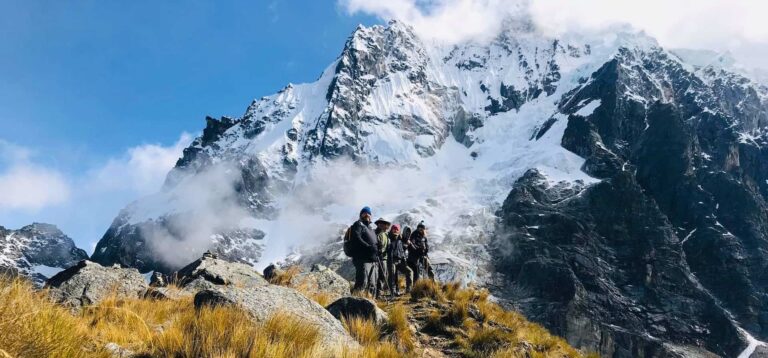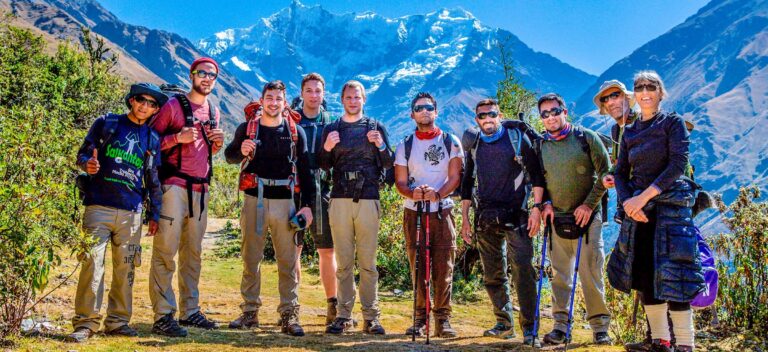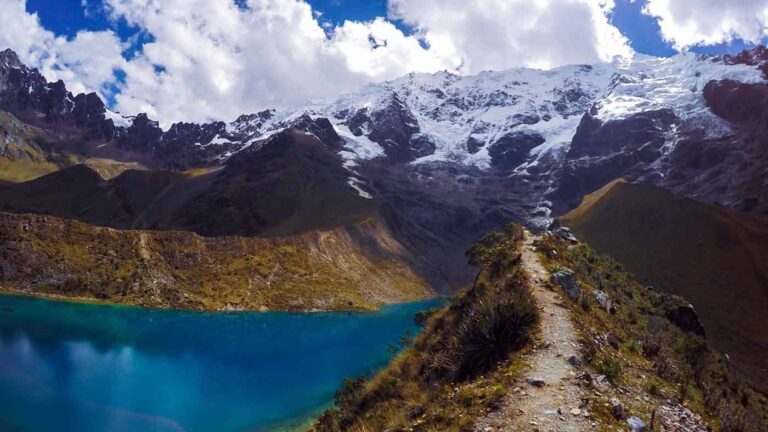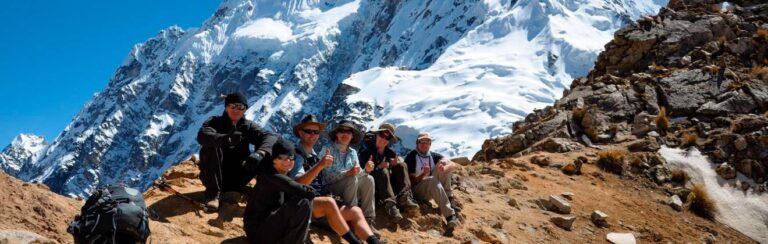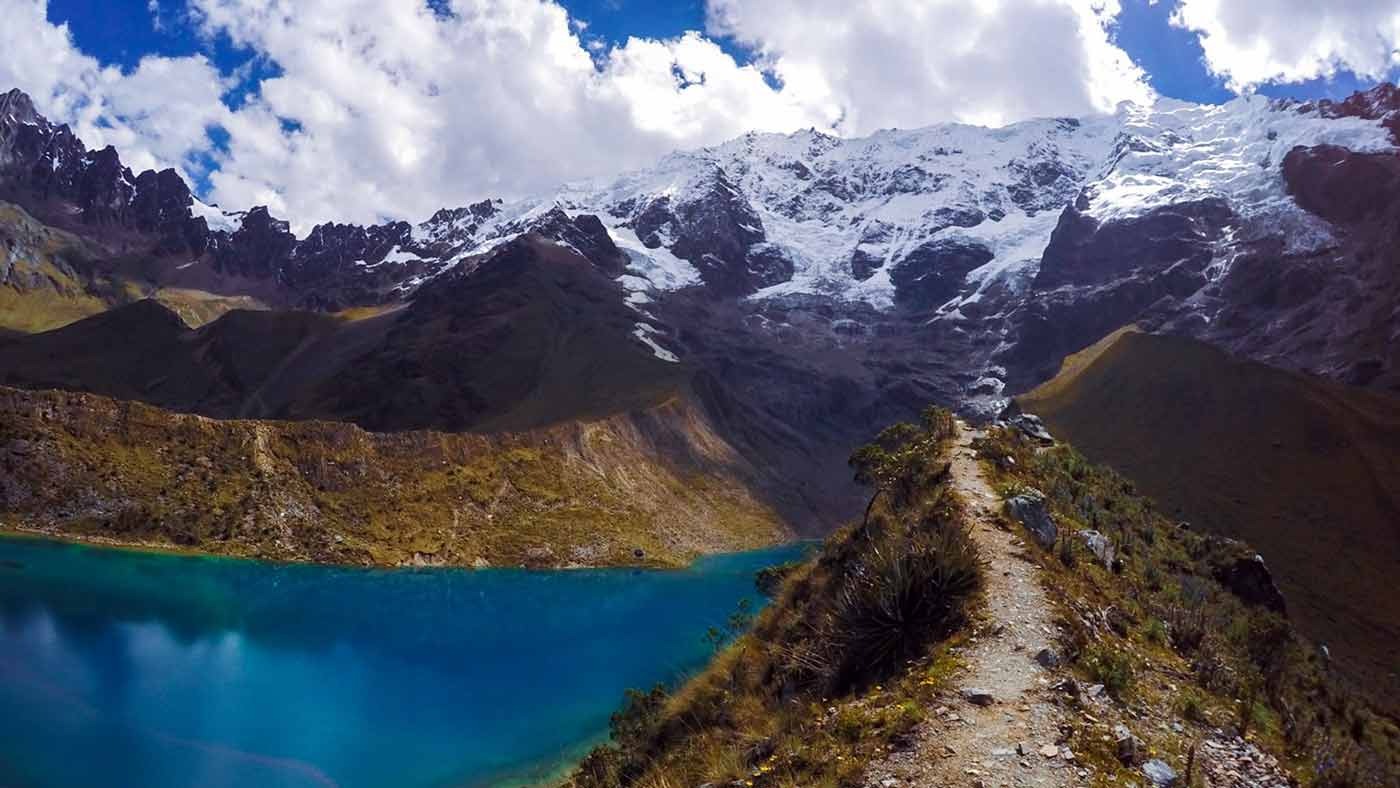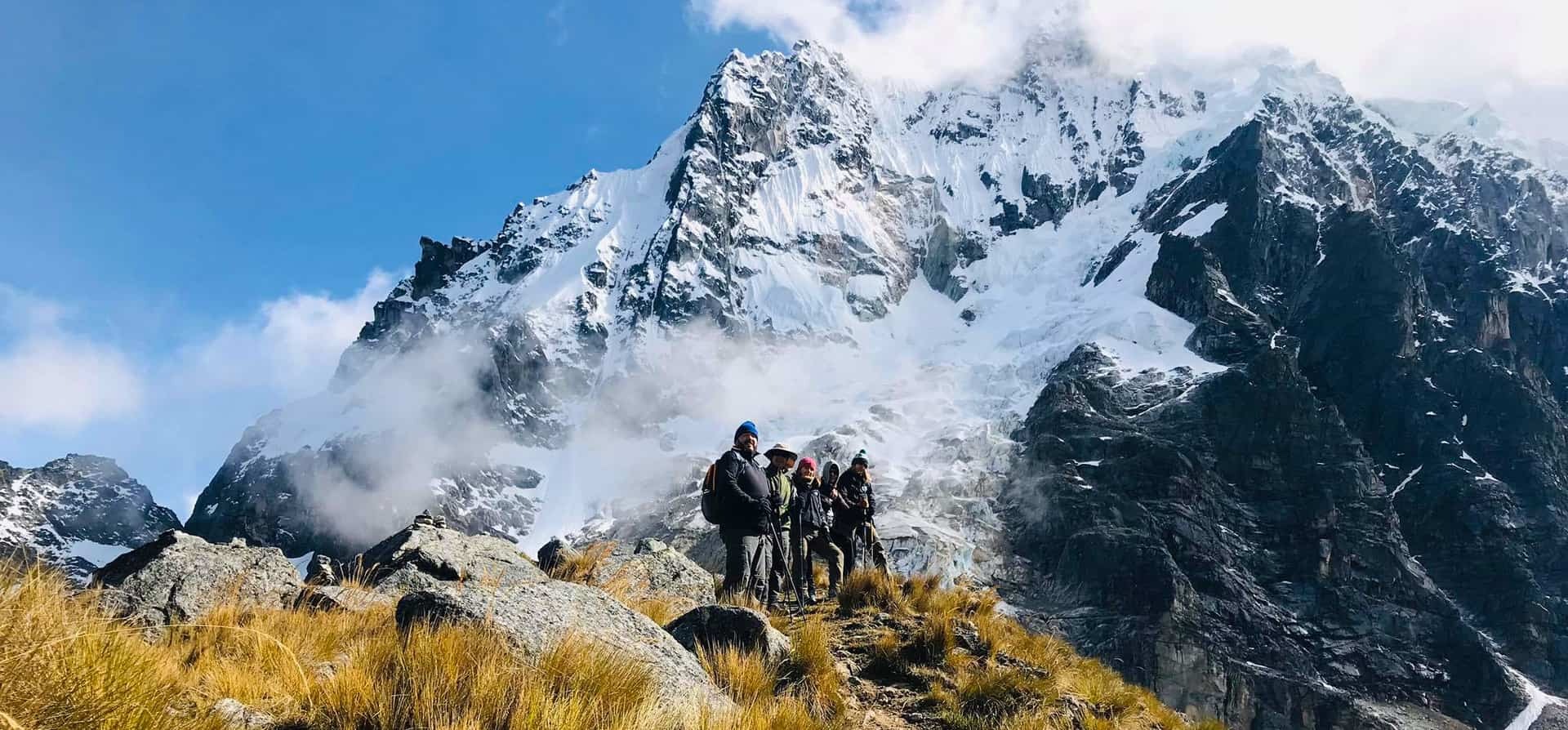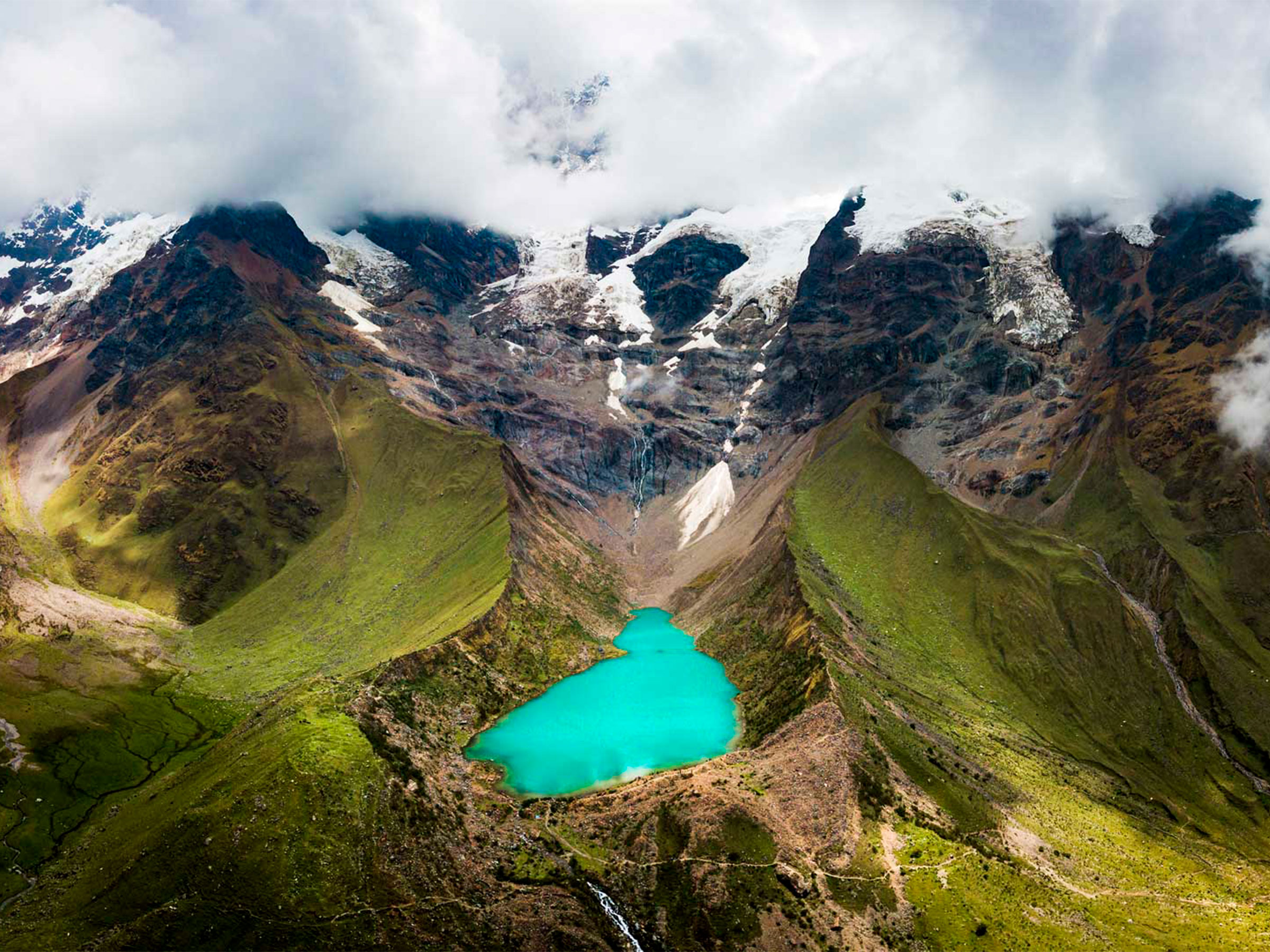
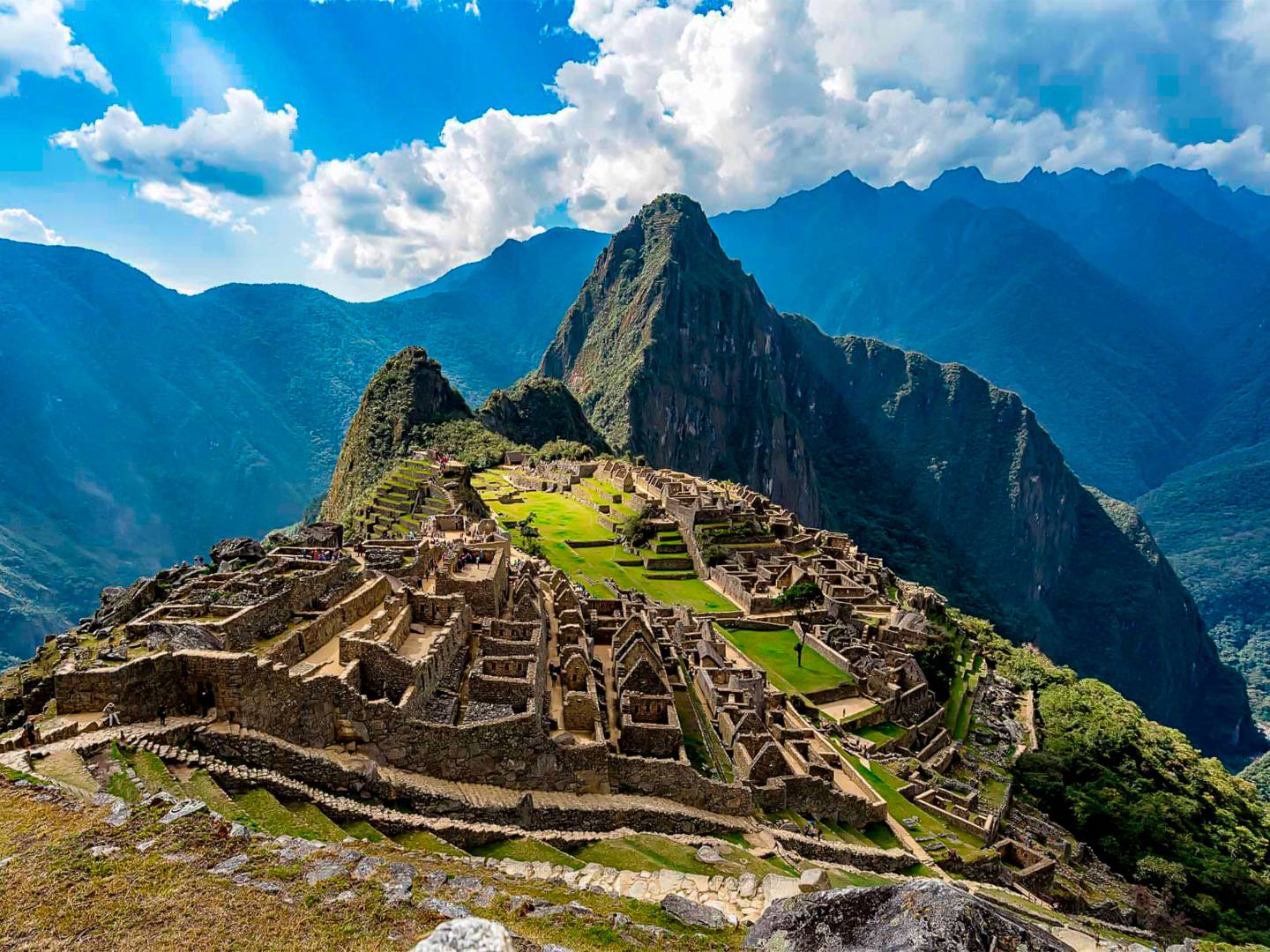
For most hikers the answer is 4 days if you want Humantay Lake, the 4,650 m Salkantay Pass and Machu Picchu in the shortest comfortable time, and 5 days if you prefer a calmer finish with a coffee farm, the optional Cocalmayo hot springs and your first view of Machu Picchu from the Llactapata Inca site. The first two days of both treks are the same; the difference is everything that happens after the pass. If you are very short on time there is a 3-day version, and if you want to walk into Machu Picchu through the Sun Gate there is a 6-day version with a short section of the Inca Trail.
This article compares all our versions side by side. For the full picture of the route, its history and logistics, start with our complete Salkantay trek guide.
All Salkantay versions at a glance
| 2 days | 3 days | 4 days | 5 days | 6 days | |
|---|---|---|---|---|---|
| Nights | 1 | 2 | 3 | 4 | 5 |
| Humantay Lake | Yes, day 1 | No | Yes, day 1 | Yes, day 1 | Yes, day 1 |
| Salkantay Pass (4,650 m) | Day 2 | Day 1 | Day 2 | Day 2 | Day 2 |
| Coffee farm | No | Passes Lucmabamba | Cloud forest plantations on the way | Coffee tour at Lucmabamba | Coffee experience at Lucmabamba |
| Llactapata view of Machu Picchu | No | No | No | Yes | Yes |
| Inca Trail section | No | No | No | No | Yes, to the Sun Gate |
| Ends at Machu Picchu | No, back to Cusco | Yes | Yes | Yes | Yes |
| Max group size | 10 | 10 | 10 | 15 | 10 |
All versions that end at Machu Picchu include the entrance ticket and a guided tour of the main sectors, followed by free time.
4 days vs 5 days, day by day
| Day | 4-day Salkantay trek | 5-day Salkantay trek |
|---|---|---|
| 1 | Cusco → Mollepata (breakfast) → Soraypampa (about 3,900 m). Hike to Humantay Lake (about 4,200 m). Camp at Soraypampa. | Same as the 4-day: Humantay Lake and first night at Soraypampa. |
| 2 | Salkantay Pass (4,650 m), about 3 h up from Soraypampa, then down past Soyrococha and Wayracmachay (lunch) to Collpapampa (about 2,850 m). About 22 km. Camp. | Same pass day: about 22 km over the pass to the camp at Collpapampa. |
| 3 | Down through the cloud forest to Hidroeléctrica (about 1,880 m), then walk along the railway to Aguas Calientes (about 2,040 m). Hotel. | Cloud forest, coffee and fruit plantations to Lucmabamba (about 2,050 m), with a coffee tour. About 14 km. Camp. |
| 4 | Machu Picchu (about 2,430 m): guided tour and free time. Train to Ollantaytambo and transfer to Cusco. | Climb to Llactapata (about 2,736 m) for the first view of Machu Picchu, down to Hidroeléctrica and about 3 h along the railway to Aguas Calientes. About 18 km. Hotel. |
| 5 | (trek already finished) | Machu Picchu: guided tour and free time, then return to Cusco. |
What actually changes after the pass
Up to Collpapampa, the 4-day and 5-day treks are the same walk. From day 3 they become two different experiences.
The 4-day trek: straight to Aguas Calientes
On the 4-day trek, day 3 takes you down from the cloud forest to Hidroeléctrica and on to Aguas Calientes, so you sleep in a hotel the night before Machu Picchu. It is efficient and still very scenic, with orchids, coffee and fruit plantations as you lose altitude. The trade-off is that you see the cloud forest at walking pace but without stopping for long, and you do not get the Llactapata viewpoint.
The 5-day trek: Lucmabamba, coffee and Llactapata
The 5-day trek slows down after the pass. Day 3 is shorter (about 14 km) and ends at Lucmabamba, an area of coffee farms, and the tour includes a coffee tour there. The 5-day trek also offers the option of the Cocalmayo hot springs near Santa Teresa (entry is not included in the tour), a welcome treat for tired legs.
For many people, day 4 is the highlight: you climb to Llactapata, a small Inca site at about 2,736 m, from where you see Machu Picchu for the first time, across the valley and from a distance. Seeing it from there the day before you walk through its gates is something the shorter versions miss. You then descend to Hidroeléctrica and walk about 3 hours along the railway to Aguas Calientes.
Daily effort: where the hard days are
Whatever version you pick, the pass day is the toughest. On the 4, 5 and 6-day treks you walk about 22 km that day, climbing to 4,650 m and then descending about 1,800 m to the camp. Here is how the effort is distributed:
- 4 days: day 1 is a short but high hike to Humantay; day 2 is the big one; day 3 is a long descent plus the railway walk; day 4 is Machu Picchu. Fewer days, so each one is fuller.
- 5 days: day 2 is the same 22 km; day 3 is gentler (about 14 km); day 4 is about 18 km with a climb to Llactapata. The pace is calmer overall, but there is one more climb.
- 3 days: the first day packs the drive, about 4 h of ascent from Soraypampa to the pass and the descent to Collpapampa, 22 km in total, without the acclimatization hike to Humantay the day before. It is a very long first day.
- 6 days: day 2 crosses the pass to Chaullay (22 km, the most challenging day) and day 3 continues 18 km to Lucmabamba before Llactapata and the Inca Trail.
We rate the Salkantay treks as moderate, and in practice they are moderate to challenging because of the altitude. For a closer look at what to expect on each section, read our article on Salkantay trek difficulty. Whatever you choose, spend at least two days in Cusco or the Sacred Valley before you start.
Nights, accommodation and group size
On all our multi-day treks, horses carry the camping equipment and your duffel bag of a few kilos, so you only walk with a daypack. A professional cook prepares the meals, with vegetarian and vegan options on request, and there is coca tea every morning and boiled water at the camps (bring 1.5–2 L for the hike itself).
At the camps you sleep in domes or panoramic cabins for two people (the names vary by camp: Sky Domes, Sky Lodge). On the treks that end at Machu Picchu, the last night is in a 2-star hotel in Aguas Calientes with private bathroom, hot water and Wi-Fi. In practice:
- 2 days: 1 night in Sky Domes at Soraypampa.
- 3 days: 1 camp night at Collpapampa and 1 hotel night in Aguas Calientes.
- 4 days: camps at Soraypampa and Collpapampa, then Aguas Calientes.
- 5 days: camps at Soraypampa, Collpapampa and Lucmabamba, then Aguas Calientes.
- 6 days: camps at Soraypampa, Chaullay and Lucmabamba, then Aguas Calientes.
Group size is the other practical difference: our 2, 3, 4 and 6-day treks take a maximum of 10 people, and the 5-day trek a maximum of 15. If you prefer a smaller group, that is a point in favour of the 4-day trek.
Getting back to Cusco
After Machu Picchu, there are two ways back depending on the trek: the train from Aguas Calientes to Ollantaytambo with a transfer to Cusco, or a car from Hidroeléctrica, which is the cheaper option. The 4-day trek returns by train to Ollantaytambo and transfer to Cusco. For the other versions, check the details on each tour page. Remember that the bus between Aguas Calientes and Machu Picchu is not included, and neither is lunch or dinner on the last day.
The other versions: 3, 6 and 2 days
3 days: the fast option
The 3-day Salkantay trek to Machu Picchu skips Humantay and crosses the pass on day 1. Day 2 descends from Collpapampa to Lucmabamba, with transport to Hidroeléctrica and the 3-hour walk to Aguas Calientes, and day 3 is Machu Picchu and the return. It works if you are fit, already well acclimatized and short on days. Otherwise, the jump to 4,650 m on the first day is hard, and we usually recommend the 4-day version.
6 days: Salkantay plus the Inca Trail
The 6-day Salkantay and Inca Trail trek crosses the pass to Chaullay, continues to Lucmabamba for a coffee experience and, like the 5-day route, climbs to Llactapata before reaching Aguas Calientes. Then, on day 5, it walks a short section of the Inca Trail to the Sun Gate (Inti Punku) and enters Machu Picchu on foot, with Inca Trail permits included. Day 6 is the guided visit and the return to Cusco. Because it depends on Inca Trail permits, it is worth booking well ahead. If you are torn between the two famous routes, our comparison of Salkantay vs the Inca Trail helps.
2 days: Humantay and the pass, without Machu Picchu
The 2-day trip goes from Cusco to Challacancha, Humantay Lake and Soraypampa on day 1 (12 km, night in Sky Domes), and over the Salkantay Pass and back to Cusco on day 2 (14 km). It is for people who have already visited Machu Picchu or only want the high mountains. Our Humantay Lake guide explains this and the other ways to see the lake.
Who each version suits
| Version | Best for | Think twice if… |
|---|---|---|
| 2 days | High mountain scenery, Machu Picchu already done | Machu Picchu is the goal |
| 3 days | Fit, acclimatized hikers with little time | You want Humantay or are new to altitude |
| 4 days | The classic highlights in a compact trip, smaller group | You want a slow pace and cultural stops |
| 5 days | A calmer pace, coffee farm, Llactapata view, optional hot springs | You need to be back in Cusco quickly |
| 6 days | Arriving at Machu Picchu on foot through the Sun Gate | You are short on days |
Choosing your Salkantay trek
If you are still undecided, think about what you would regret missing. If it is time in Cusco or the Sacred Valley, go with the 4-day Salkantay trek: you get Humantay, the pass, the cloud forest and Machu Picchu in a small group. If it is the coffee farm, the view from Llactapata and a gentler last stretch, the 5-day Salkantay trek via Llactapata is worth the extra day. If you are still unsure, ask us before booking and our guides will help you decide; once you are booked, we go through every detail at the briefing in Cusco the day before departure.
Frequently asked questions
How many days do you need for the Salkantay trek?
Four or five days is the right length for most people. Four days covers Humantay Lake, the 4,650 m Salkantay Pass and Machu Picchu; five days adds the Llactapata Inca site, a coffee farm tour and a gentler finish. Fit, well-acclimatized hikers can do it in three days, skipping Humantay.
Is the 5-day Salkantay trek harder than the 4-day?
Not really. The first two days are the same, including the 22 km pass day. The 5-day version spreads the descent to Machu Picchu over more days, but it adds the climb to Llactapata, so the total effort is similar and the pace is calmer.
Which Salkantay trek includes the view of Machu Picchu from Llactapata?
Our 5-day and 6-day Salkantay treks climb to the Llactapata Inca site, at about 2,736 m, where you get your first panoramic view of Machu Picchu from afar. The 3-day and 4-day versions do not include Llactapata.
Can I see Machu Picchu on the 2-day Salkantay trip?
No. The 2-day trip visits Humantay Lake, sleeps at Soraypampa and crosses the Salkantay Pass before returning to Cusco. It suits travellers who have already been to Machu Picchu or only want the high mountain section.
Which Salkantay trek ends on the Inca Trail?
Our 6-day Salkantay trek joins a short section of the Inca Trail on day 5 and reaches Machu Picchu through the Sun Gate, Inti Punku. The Inca Trail permits are included in that tour.
Do you sleep in tents on the Salkantay trek?
On our multi-day treks you sleep in domes or panoramic cabins for two people at the camps, and the last night is in a 2-star hotel in Aguas Calientes with private bathroom, hot water and Wi-Fi.