Choose the Inca Trail if walking into Machu Picchu through the Sun Gate and passing a chain of Inca ruins matters most to you, and you can book months ahead. Choose the Salkantay Trek if you want high glaciers, a turquoise lake and cloud forest, more flexible dates and no permit hunt, and you’re ready for a higher pass. If you want both, there’s a 6-day route that links them.
We guide both routes from our office in Cusco, so below is the honest comparison we give travellers at our briefings. For the full overview of the Salkantay route itself, see our complete Salkantay trek guide.
Salkantay vs Inca Trail at a glance
| Salkantay Trek (classic 5 days) | Classic Inca Trail (4 days) | |
|---|---|---|
| Permit | No trekking permit; small local entrance fees in soles | Government permit required; daily permits are limited |
| Booking lead time | Daily departures, more flexible | Often sells out months ahead |
| Highest point | Salkantay Pass, 4,650 m | Dead Woman’s Pass (Warmiwañusca), 4,215 m |
| Distance | 22 km on the pass day alone; 54 km over days 2–4 | 42 km, starting at KM 82 |
| Main scenery | Snow peaks, Humantay Lake, cloud forest, coffee farms | Andean valleys, cloud forest, Inca stonework |
| Inca sites on the way | Llactapata (≈ 2,736 m) | Patallacta, Runkurakay, Sayacmarca, Phuyupatamarca, Wiñay Wayna |
| Arrival at Machu Picchu | Via Aguas Calientes, after a hotel night | On foot through the Sun Gate (Inti Punku) |
| Nights | Domes for two at the camps + hotel in Aguas Calientes | Tents |
| Who carries the load | Horses carry camping gear and your duffel bag | A porter carries part of your gear |
| February | Runs (rainy season) | Closed for maintenance |
Permits and how far ahead to book
This is often the deciding factor. The Inca Trail requires a government permit, and the number of permits per day is limited. In practice they often sell out months in advance, especially for the dry season. If you’re reading this a few weeks before your trip, the classic Inca Trail may already be off the table.
The Salkantay Trek needs no trekking permit. You pay small entrance fees in soles to local communities along the way, and we run daily departures. That makes it the natural choice for travellers who decide late or whose dates are fixed. The one ticket you still need is your Machu Picchu entrance, which is included in our treks that end at Machu Picchu. Those tickets are sold for fixed entry times and circuits, so it still pays to book early in the busy months.
Altitude and difficulty
Both treks are rated moderate to challenging, but the challenge is different.
- Salkantay goes higher. The Salkantay Pass sits at 4,650 m, and the first camp at Soraypampa is already around 3,900 m. The pass day is long, about 22 km, with a steady climb in the morning and a long descent to Collpapampa (≈ 2,850 m) in the afternoon.
- The Inca Trail is lower but steeper underfoot. Its high point, Dead Woman’s Pass, is 4,215 m. The trail is famous for its stone Inca steps, which are tough on the knees going down.
On both routes the altitude is the real test, not the distance. Spend at least two days in Cusco or the Sacred Valley before you start, drink plenty of water and go slowly. We go into much more detail in our article on how hard the Salkantay Trek really is.
Scenery: glaciers vs ruins
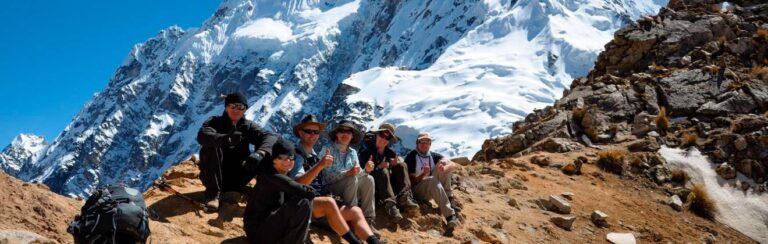
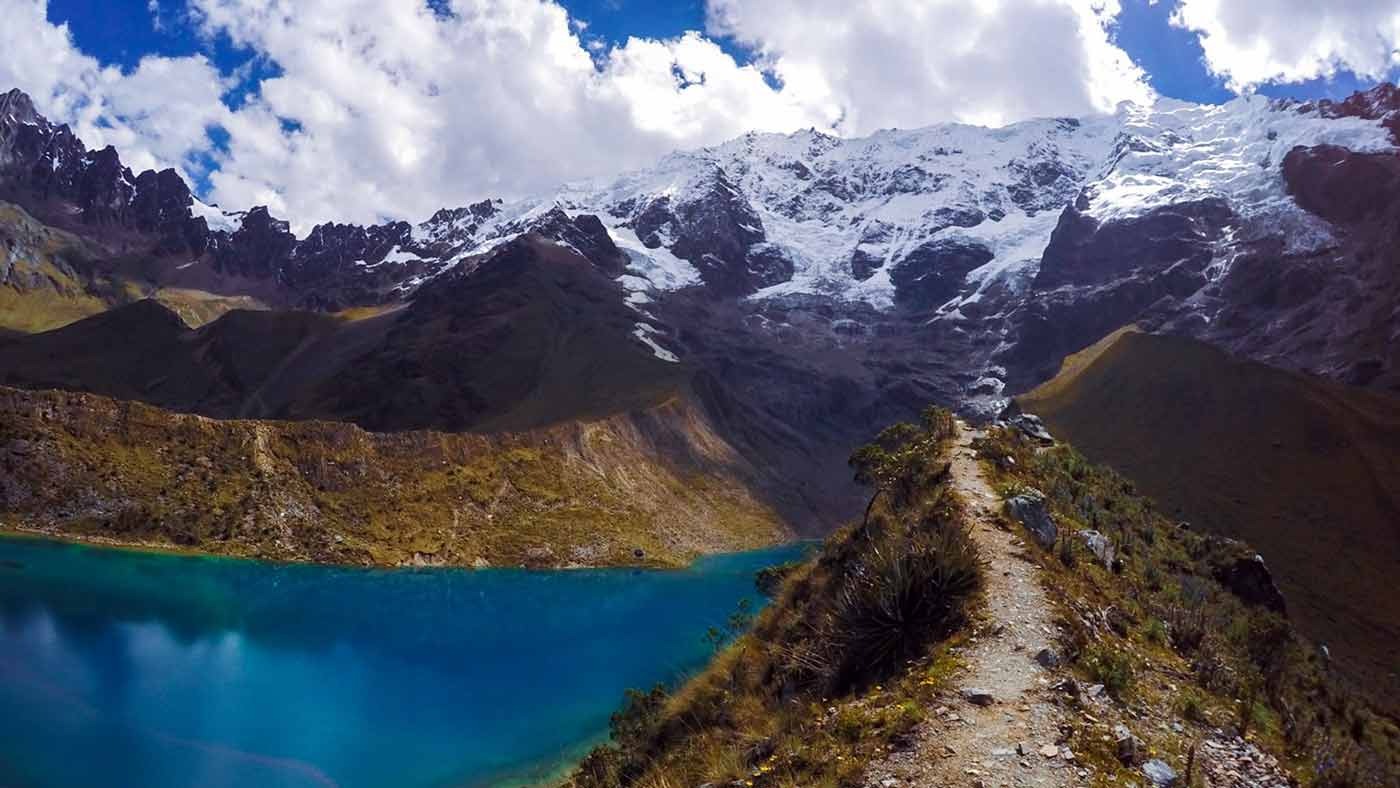
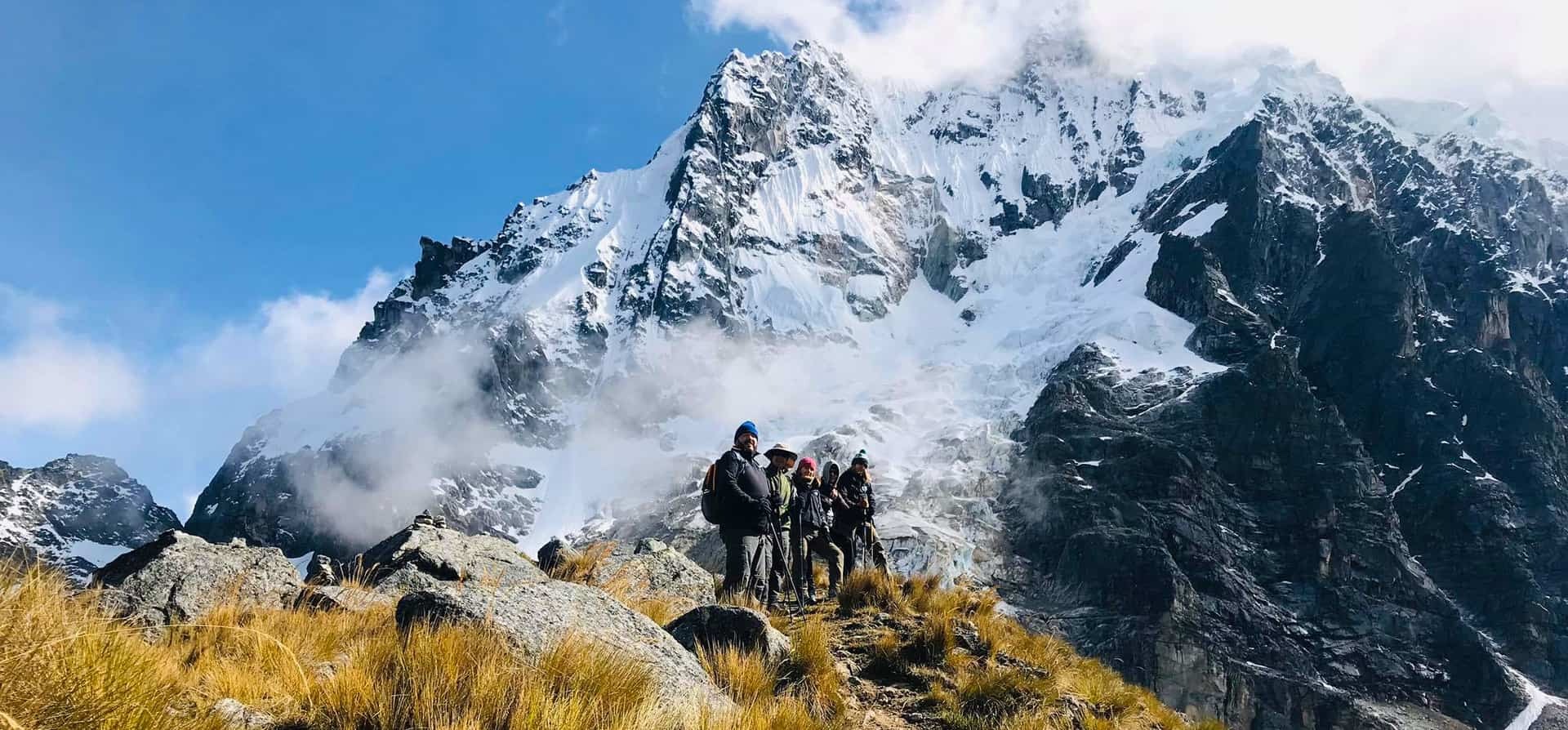
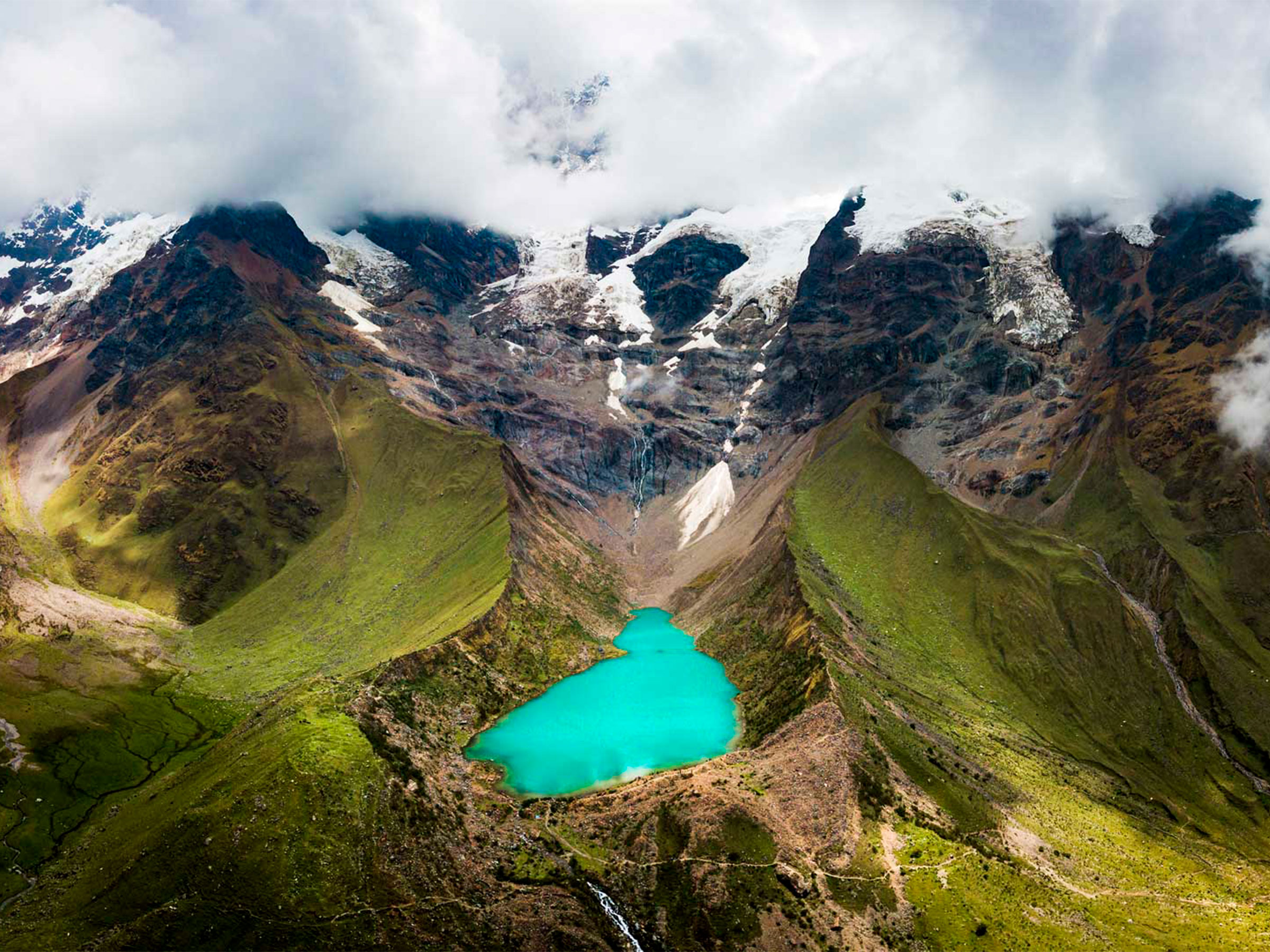
The Salkantay Trek is about changing landscapes. You start in high Andean country below Salkantay mountain (6,271 m, the highest peak of the Vilcabamba range), visit glacier-fed Humantay Lake (about 4,200 m), cross the pass with views of Salkantay, Humantay and other snow peaks, and then drop into cloud forest with orchids, coffee and fruit plantations. In a few days you go from ice to high jungle.
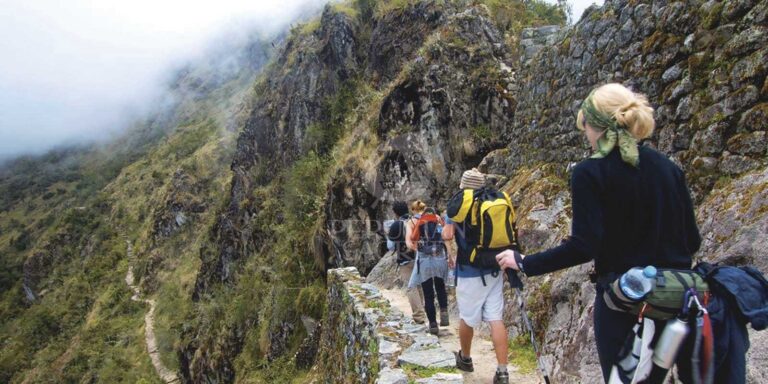
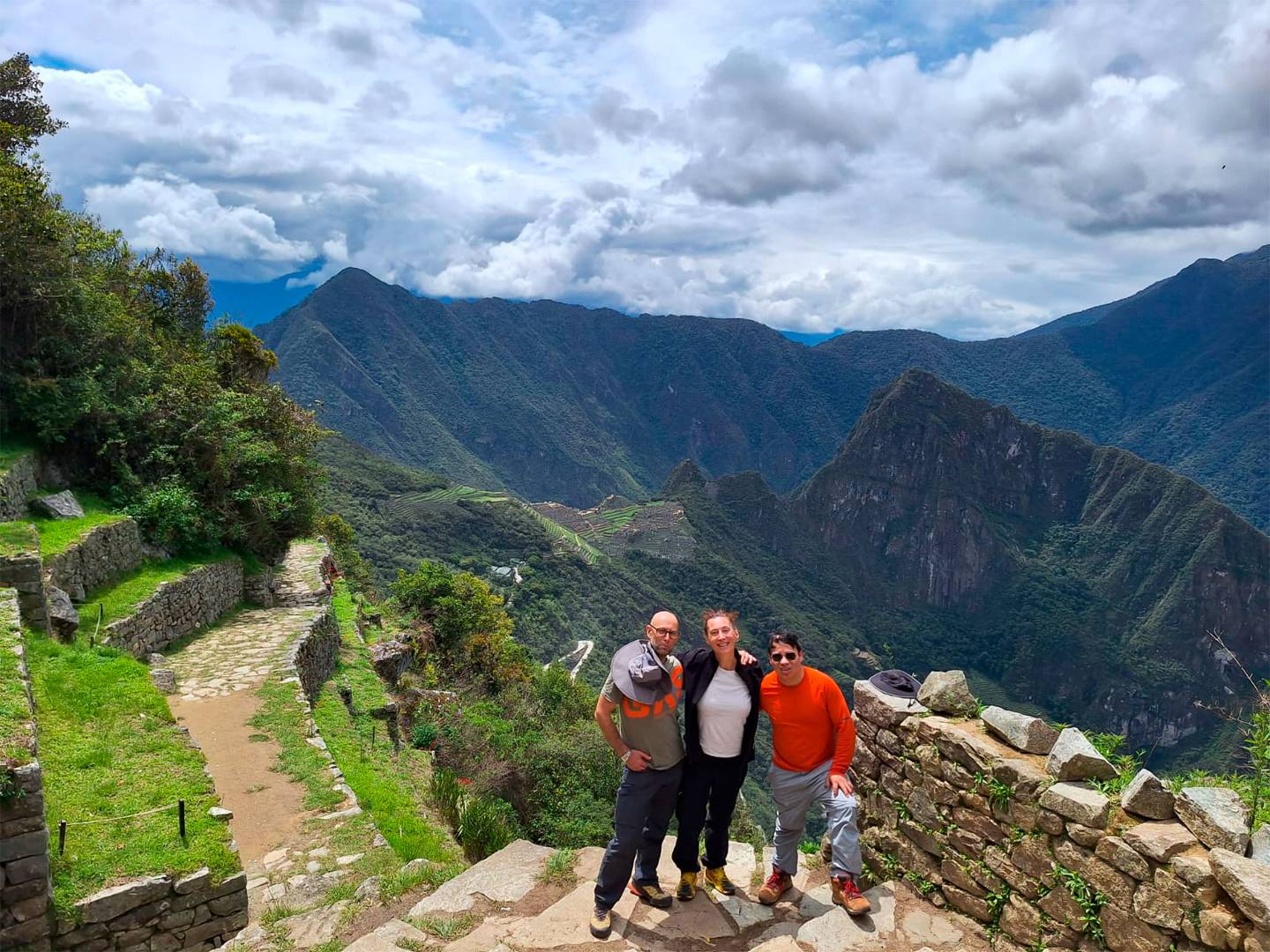
The Inca Trail also passes through valleys and cloud forest, but its real highlight is the stonework: terraces, stairways and the ruins you walk through one after another. If you love history more than mountains, it’s hard to beat.
Inca sites along the way
Here the Inca Trail clearly wins. Along its 42 km you visit Patallacta, Runkurakay, Sayacmarca, Phuyupatamarca and Wiñay Wayna before reaching Machu Picchu.
On our classic 5-day Salkantay route, the main Inca site before Machu Picchu is Llactapata (≈ 2,736 m). From there you get your first panoramic view of Machu Picchu from across the valley, which is a special moment. The rest of the Salkantay experience is mountain and forest rather than archaeology.
How you arrive at Machu Picchu
- Inca Trail: you walk the last stretch and enter through the Sun Gate (Inti Punku), looking down on Machu Picchu. For many people this is the whole reason to do it.
- Salkantay (5 days): after Llactapata you descend to Hidroeléctrica (≈ 1,880 m) and walk about 3 hours along the railway to Aguas Calientes (≈ 2,040 m). You sleep in a 2★ hotel with a private bathroom and hot water, then visit Machu Picchu on the final day with a guided tour of the main sectors and free time afterwards. The bus from Aguas Calientes up to Machu Picchu is not included.
The Salkantay arrival is less dramatic, but arriving rested and showered after a hotel night has its own appeal.
Where you sleep
On our Salkantay treks you sleep in domes and panoramic cabins for two people at the camps (our “Sky Domes” / “Sky Lodge”), with meals from a professional cook, coca tea every morning and boiled water at camp. The last night is in a hotel in Aguas Calientes.
On the Inca Trail you camp in tents, which is part of the classic experience. On our Salkantay treks the sleeping bag is not included, but you can rent one.
Crowds and dates
Inca Trail permits are capped, but everyone walks the same narrow stretch on a similar schedule, so it can still feel busy in high season. Salkantay has no permit cap and groups depart every day, but much of the route is wide open country, and the experience tends to feel less like a queue. Our group sizes are small: up to 15 people on the 5-day trek and up to 10 on the 3-, 4- and 6-day treks.
The dry season (roughly May to September) brings the clearest skies and the most hikers on both routes. April, October and November are good shoulder months. If you’re weighing dates, read our guide to the best time to do the Salkantay Trek.
The February closure
The classic Inca Trail closes every February for maintenance. If your trip falls in February, Salkantay is the main multi-day trek to Machu Picchu. Be honest with yourself about the conditions, though: January and February are the wettest months, with mud on the trail and clouds that can hide the peaks. The landscapes are very green, and with good rain gear it’s still a great trek.
Who should choose which
Choose the Inca Trail if:
- History and Inca sites are your main interest.
- Entering Machu Picchu through the Sun Gate is a must.
- You can book several months ahead and your dates are flexible to match permit availability.
- You prefer a slightly lower high point.
Choose the Salkantay Trek if:
- You want high mountain scenery, glaciers and Humantay Lake.
- You’re booking with less notice, or Inca Trail permits are sold out.
- You’re travelling in February.
- You like the idea of sleeping in domes rather than tents.
- You’re fit and happy to take on a higher pass in exchange for bigger views.
If you can’t decide between trek lengths, our article on choosing between the 4- and 5-day Salkantay can help.
The 6-day combo: Salkantay plus the Inca Trail
You don’t always have to choose. Our 6-day Salkantay and Inca Trail trek gives you the big mountain days and the Sun Gate arrival:
- Soraypampa and Humantay Lake (9 km).
- Salkantay Pass to Chaullay (22 km), the most challenging day.
- Down to Lucmabamba (18 km) with a coffee experience.
- Llactapata and on to Aguas Calientes.
- A short section of the Inca Trail to the Sun Gate and into Machu Picchu (Inca Trail permits included).
- Machu Picchu and return to Cusco.
Since it includes Inca Trail permits, book it as early as you would the classic Inca Trail.
Which trek is right for you
If you want the mountains and the most flexible dates, our classic 5-day Salkantay Trek via Llactapata is the route we recommend first. If the Inca ruins and the Sun Gate are what you’ve dreamed of, look at the 4-day classic Inca Trail and book early. And if you want a bit of both, the 6-day combo is the one. Whichever you choose, our bilingual guides will brief you in Cusco the day before, and they carry a first-aid kit and emergency oxygen on every trek.
Frequently asked questions
Is the Salkantay Trek harder than the Inca Trail?
Most hikers find Salkantay harder because it goes higher: the Salkantay Pass is 4,650 m, while Dead Woman’s Pass on the Inca Trail is 4,215 m. The Inca Trail has its own challenge in its long stone staircases.
Can I do the Salkantay Trek if the Inca Trail is sold out?
Yes. The Salkantay route needs no government trekking permit, so it is the usual choice when Inca Trail permits are gone. You still need a Machu Picchu entrance ticket, which is included in our treks that end there.
Do you see Inca ruins on the Salkantay Trek?
On the 5-day route you visit Llactapata, an Inca site with a distant view of Machu Picchu, and of course Machu Picchu itself. The Inca Trail has many more ruins along the way.
Is the Inca Trail open in February?
No. The classic Inca Trail closes every February for maintenance. Salkantay treks still run in February, although it is the heart of the rainy season.
Can I combine the Salkantay Trek and the Inca Trail?
Yes. Our 6-day trek crosses the Salkantay Pass and then joins a short section of the Inca Trail, so you enter Machu Picchu on foot through the Sun Gate. Inca Trail permits are included.